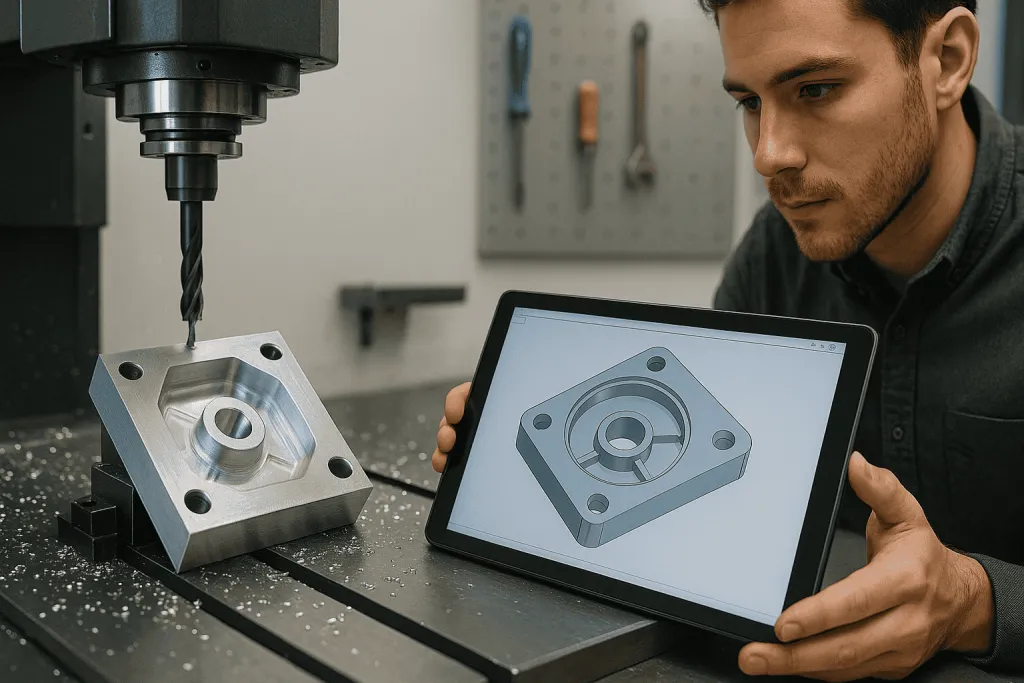
If you’re building a physical product and need a prototype that works—not just one that looks good—CNC machining is one of the most reliable ways to get there.
It’s fast, accurate, and ideal for small batch production. And for startups trying to validate demand before committing to mass manufacturing, CNC machining for prototypes delivers real value without the high costs or long lead times.
Here’s what founders need to know to use CNC machining effectively for early-stage product development.
Why CNC Machining Is Ideal for Prototypes
Unlike 3D printing, which is great for basic proof-of-concept models, CNC machining can create functional, testable parts from real-world materials like aluminum, steel, or hard plastics. The end result isn’t fragile—it’s something you can stress-test, iterate on, and even ship if needed.
Startups choose CNC machining when:
- The prototype must withstand heat, pressure, or load
- They need tight tolerances and precise geometry
- The parts must simulate the real final product
- They want to test assembly fit or mechanical performance
CNC prototyping services are especially useful when you’re moving beyond early sketches and entering serious design validation.
Main Pain Point: “I Don’t Want to Wait Weeks or Pay Corporate-Level Pricing”
Traditional CNC machining services often come with large minimum order requirements, long quoting cycles, or premium pricing designed for big engineering firms.
That doesn’t work for solo founders and eCommerce entrepreneurs who need:
- 1 to 100 functional units
- Fast turnaround (days, not weeks)
- Affordable CNC machining with clear costs upfront
Startup-friendly services solve this by offering low-volume CNC machining, fast quoting, and transparent pricing models—like $25/hour for engineering time, plus materials and shop costs. No hidden fees. No padded production timelines.
What You Can Expect from Startup-Focused CNC Machining Services
If you’re prototyping hardware, consumer electronics, IoT devices, or functional parts for your product, a lean CNC workflow gives you:
1. Speed
Rapid CNC prototyping can turn around machined parts in as little as 3–7 days depending on complexity.
2. Precision
With tolerances as tight as ±0.01mm, CNC machining is reliable for fit, alignment, and performance testing.
3. Durability
Parts are made from real production materials—aluminum, stainless steel, ABS, POM, or even brass—so they behave like your final product would.
4. Small Batch Flexibility
Instead of committing to 500+ units, you can get just 20 to 100 custom CNC parts to test with early customers, ship to reviewers, or validate in the field.
5. Compatibility with Your Workflow
Startups often use tools like Fusion 360, SolidWorks, or AutoCAD. CNC machining accepts common file formats like STEP, IGES, and STL, so there’s no barrier to entry.
When to Choose CNC Machining vs. 3D Printing vs. Injection Molding
Founders often ask: “Should I use CNC or 3D printing for my prototype?”
Here’s the trade-off:
| Process | Strength | Weakness |
| CNC Machining | Real materials, high strength, tight tolerances | More expensive per part |
| 3D Printing | Fast, cheap for early iterations | Limited materials, lower strength |
| Injection Molding | Great for production scale | High upfront tooling costs |
If you need just a few parts that function like the real thing, CNC machining is the way to go. It’s also a smart middle step before jumping into costly mold development.
How the CNC Machining Process Works for Startups
Most startup-focused CNC prototype services follow a simple, fast-tracked process:
- Consultation: You send your CAD file and outline basic functionality, quantity, and timeline.
- Quotation: You receive a transparent quote (engineering hours + materials).
- Machining and Testing: The prototype is machined, inspected, and delivered—often within about 30 days.
- Iterate or Scale: If needed, revisions are made before committing to a small batch production run.
This workflow is especially effective for early-stage teams trying to validate market fit without blowing their budget.
Pain Point: “I Just Want a Few Custom CNC Parts to Test with Real Users”
Most contract manufacturers won’t talk to you unless you’re ordering 500+ units. That’s not helpful when all you need is 25 CNC aluminum housings, 50 custom brackets, or 20 structural parts to send to testers.
Look for small batch CNC machining servies that:
- Support runs as low as 10–20 units
- Provide rapid quoting and iterative support
- Offer US-based contracts but take advantage of lower-cost manufacturing (e.g., Vietnam or Southeast Asia)
This hybrid model gives startups the legal protection and communication transparency they need—without paying full enterprise rates.
What Makes CNC Machining Startup-Friendly
Founders need more than just parts. They need:
- Reliability: Deadlines matter. Reviews depend on quality.
- Transparency: No vague pricing or bait-and-switch tactics.
Speed: Launch cycles can’t wait 4–6 weeks for a prototype. - Flexibility: You may change your design after testing. A partner should support that without hassle.
The best CNC prototyping services are structured around these priorities, not around big-factory minimums.
Start CNC Machining for Prototypes
CNC machining for prototypes is the go-to solution for startups that need reliable, functional parts fast. It gives early-stage teams the ability to:
- Build real, testable components
- Ship small batches to customers or reviewers
- Iterate without long delays or massive costs
Whether you’re designing a consumer product, electronics housing, or mechanical device, CNC machining offers the speed, strength, and accuracy needed to bring ideas to life.
CNC Prototyping: Precision in Product Development
At Prototyperlab, CNC prototyping is one of the most reliable ways to transform a digital design into a functional product sample with accuracy and speed. By using computer-controlled machining, engineers and designers can test form, fit, and functionality before committing resources to mass production. This approach not only reduces risk but also accelerates development cycles, which is why CNC-based prototyping is now widely adopted across industries from medical devices to automotive components.
How CNC Prototyping Works
Design and CAD Modeling
The process begins with a 3D CAD file that defines every measurement and tolerance. These digital models ensure that prototypes mirror the final product as closely as possible.
G-Code Generation
Once the design is complete, the CAD model is converted into G-code, a machine-readable instruction set. This code dictates tool speed, cutting depth, and tool paths with micron-level accuracy.
Machining
CNC mills, lathes, or multi-axis machines remove material from a solid block of metal or plastic. Unlike additive manufacturing, which builds up layers, CNC is subtractive and achieves excellent dimensional stability.
Post-Processing
After machining, parts often require finishing steps such as sanding, bead blasting, anodizing, or painting. These treatments provide the correct surface finish, improve durability, and prepare the part for real-world testing.
Benefits of CNC Prototyping
Accuracy and Precision
CNC machines can achieve tolerances as tight as ±0.005 inches. This makes them ideal for parts that must fit seamlessly into assemblies or meet strict regulatory standards.
Speed
A CNC prototype can be produced within days, compared to weeks with traditional tooling. Faster turnaround enables quicker iteration and a shorter path to market.
Cost Savings
By catching design flaws early, companies avoid costly retooling later in production. According to industry data, prototyping with CNC can cut overall development expenses by up to 30%.
Functional and Visual Testing
CNC prototypes are not just for display. They are robust enough to undergo performance testing under stress, temperature, or wear conditions.
Material Versatility
CNC machining supports a wide range of materials, from engineering plastics to aluminum, steel, and titanium. This flexibility makes it suitable for nearly any industry application.
CNC prototyping combines speed, precision, and adaptability, giving startups and manufacturers the confidence to refine designs and scale production with fewer risks.
Get a Quote for CNC Machining for Prototypes
Send over a sketch, a CAD file, or just a description of what the product needs to do. A real quote comes back within 48 hours.
Get a free quote