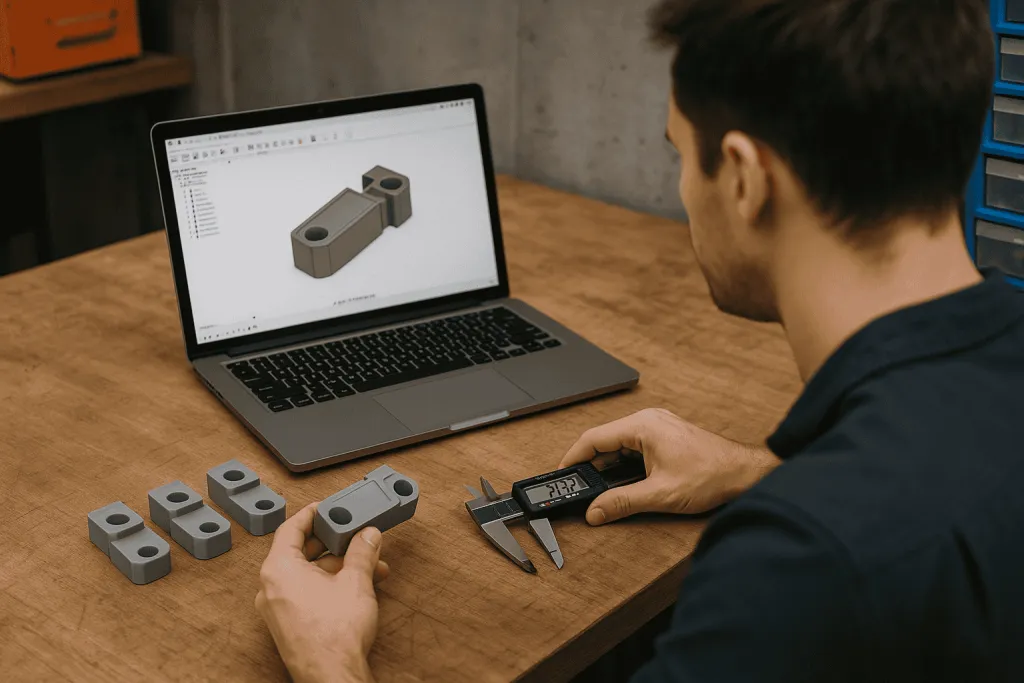
Early-stage hardware founders face a tough question when preparing to launch a new product: injection molding vs. 3D printing for startups?
Both methods have their advantages—but if you’re only planning to produce 20 to 100 units, the choice can make or break your timeline, budget, and product quality.
This guide breaks down the trade-offs so founders can choose the best approach for low-volume manufacturing without wasting time or capital.
1. What’s the Real Difference Between Injection Molding vs. 3D Printing for Startups?
At a glance:
- Injection Molding uses custom metal molds to inject molten plastic into a fixed shape. It’s great for high-volume production but comes with high upfront tooling costs.
- 3D Printing builds parts layer-by-layer from digital files. It’s flexible, fast, and ideal for prototyping and low-volume runs.
2. Cost Comparison: Upfront vs. Per Unit
Startups are especially sensitive to early costs. Here’s how the numbers typically play out:
| Process | Upfront Cost | Cost per Unit | Best For |
| 3D Printing | $0–$200 (file prep only) | $5–$50 | Prototypes, 1–50 units |
| Injection Molding | $2,500–$10,000+ (tooling) | $0.50–$5 | 500+ units |
If you’re producing fewer than 200 units, 3D printing often wins on total cost. Once you’re scaling beyond that, injection molding becomes more economical—but only after you’ve validated demand.
3. Speed: How Fast Can You Get to Market?
- 3D Printing can deliver functional parts in 1–3 days, making it ideal for rapid iterations or same-week testing.
- Injection Molding requires weeks to build and tune the mold, with total timelines stretching to 4–8 weeks for first parts.
For founders working on tight timelines or Kickstarter launches, 3D printing offers the speed advantage.
4. Quality and Surface Finish: Which Looks More Polished?
- Injection Molded parts typically have a more finished look—smooth surfaces, tighter tolerances, and production-grade plastics.
- 3D Printed parts, depending on the process (FDM, SLA, SLS), may show visible layer lines or need post-processing for aesthetics.
If you’re creating customer-facing products, injection molding offers higher polish, but 3D printing is often “good enough” for test markets or B2B pilots.
5. Volume and Repeatability: How Many Units Can You Produce Reliably?
- Injection Molding is designed for high-volume runs—up to hundreds of thousands from a single mold.
- 3D Printing is ideal for low runs (1–200 units), but becomes inefficient at scale.
If you’re only looking to produce 20–100 units for validation, 3D printing keeps your investment low while offering flexibility to tweak designs as feedback rolls in.
6. Design Flexibility and Iteration Speed
- With 3D printing, updates are instant—you can adjust your CAD file and print the new version the same day.
- With injection molding, design changes require mold rework or full rebuilds, adding time and expense.
Startups iterating toward product-market fit should stick with 3D printing until the design is locked.
7. Tooling Investment and Risk
Mold creation is expensive. If the product flops, that tooling cost is sunk. Many founders rush into injection molding only to find out later the market isn’t ready—or the design still needs refinement.
That’s why hardware startups and eCommerce sellers often begin with 3D printing, then switch to molding only after getting traction on Amazon, Shopify, or Kickstarter.
8. When to Use 3D Printing vs. Injection Molding
Here’s a simple decision matrix:
| Use Case | Recommended Method |
| Rapid prototyping | 3D Printing |
| Pre-launch testing (20–100 units) | 3D Printing |
| Market validation batches | 3D Printing |
| Design locked, scaling past 500 units | Injection Molding |
| Cosmetic polish & tight tolerances needed | Injection Molding |
| Iterative development cycles | 3D Printing |
9. Why Startups Choose Hybrid Strategies
Many founders start with 3D printed prototypes and low-volume test batches, then graduate to injection molding after validating their idea.
This hybrid approach lets you move fast, stay flexible, and avoid wasting $5K–$10K on tooling before you’re ready to scale.
At small volumes, it’s not just about cost—it’s about risk management.
10. Startup-Friendly Advice: How to Keep Costs Low and Launch Faster
If you’re looking to:
- Build a working prototype in a few days
- Test your product with just 20–50 units
- Avoid massive upfront investments
- Compare plastic prototyping methods without confusion
Start with 3D printing. And work with a partner who understands low-volume manufacturing, rapid iteration, and eCommerce timelines.
Choose the Right Method for Your Product
At PrototyperLab, founders get:
- 30-day prototyping (via 3D printing or molding)
- Low-volume production (as few as 20 units)
- Transparent pricing at $25/hour for engineering
- No upfront costs until you approve the quote
Get your prototype built, tested, and refined—without breaking the bank.
Get a Free Quote in 24 Hours
Send over a sketch, a CAD file, or just a description of what the product needs to do. A real quote comes back within 48 hours.
Get a free quote