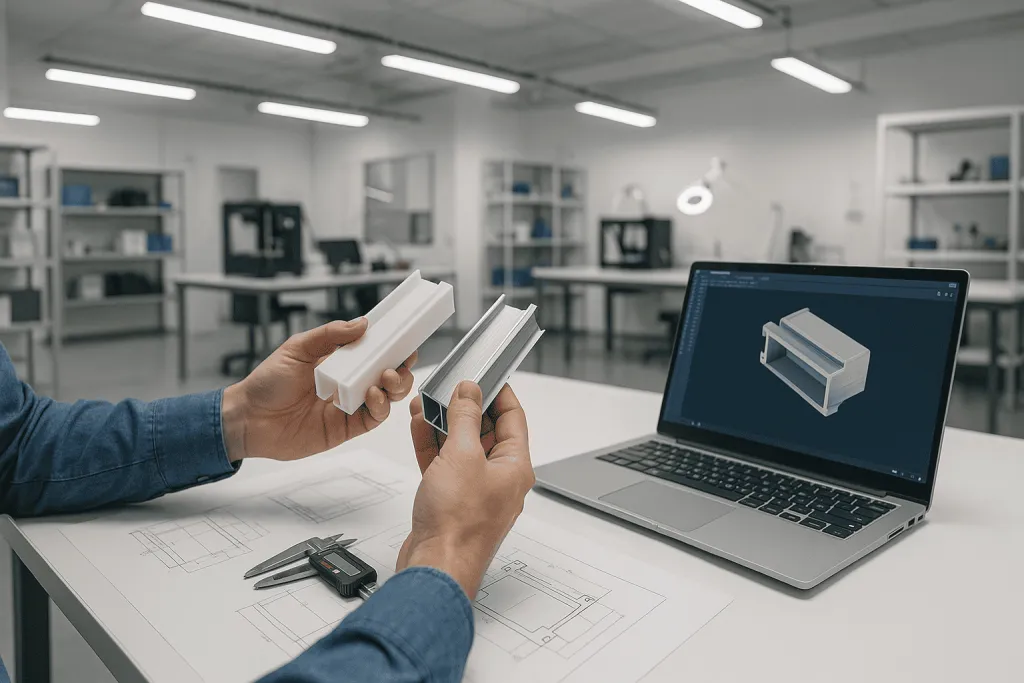
Choosing the right material for extrusion can make or break your product’s cost, durability, and overall success—especially in early-stage prototyping or low-volume production.
This guide breaks down the trade-offs between plastic vs. aluminum extrusion so founders can make the smartest call based on budget, function, and speed to market.
What Is Extrusion?
Before choosing between plastic and aluminum, it’s critical to understand what extrusion actually involves. This section quickly defines the process so you can evaluate materials within the right context.
Extrusion is a manufacturing process that pushes material through a shaped die to create long, uniform profiles. It’s commonly used for structural components, enclosures, rails, and custom parts in both plastic and aluminum.
Plastic vs. Aluminum Extrusion: Quick Comparison
Founders need fast, side-by-side insight to guide material decisions. This chart offers a head-to-head breakdown of the key traits that matter most in early product development.
| Feature | Plastic Extrusion | Aluminum Extrusion |
| Cost | Lower tooling + material costs | Higher material cost, moderate tooling |
| Strength | Suitable for light-duty use | Strong, rigid, durable |
| Weight | Extremely lightweight | Lightweight, but heavier than plastic |
| Aesthetics | Easy to color match, texture, or polish | Premium finish, anodized or brushed |
| Thermal Performance | Poor heat resistance | Excellent for heat dissipation |
| Environmental Resistance | Variable (depends on resin) | High corrosion resistance |
| Scalability | Better for small batch plastic parts | Scales well with higher volume |
| Minimum Wall Thickness | Thicker | Thinner, more precision is possible |
When to Choose Plastic Extrusion
Plastic extrusion is often the smarter choice during early prototyping and short test runs. This section outlines where plastic makes sense—and why it saves time and money when you’re just getting started.
Ideal for MVPs, Prototypes, and Soft Launches
Plastic is the go-to material when the budget is tight and the timelines are short. For early-stage testing, plastic extrusion gives enough durability to test a concept without overspending.
Use Cases
- Consumer packaging
- Decorative trims
- Light-duty enclosures
- Non-structural brackets
Benefits
- Fast tooling turnaround
- Low cost per unit at small volumes (20–100 units)
- More flexibility in colors, finishes, and opacity
When to Choose Aluminum Extrusion
Aluminum extrusion becomes the better option when durability, heat performance, and premium presentation matter. Here’s when it pays off to invest more upfront.
Best for Functional Prototypes and Premium Builds
Aluminum is the stronger, longer-term choice when your product needs rigidity, structural integrity, or a more professional finish. It’s also ideal for applications involving heat or physical stress.
Use Cases
- IoT enclosures
- Wall mounts
- Device frames
- Channels, sliders, or guides
Benefits
- Durable under load and wear
- Compatible with CNC machining for post-processing
- Anodized finishes enhance aesthetics and corrosion resistance
Cost Comparison: Plastic vs. Aluminum Extrusion
Choosing the right material isn’t just about performance—it’s about cost-effectiveness in small runs. Here’s how plastic and aluminum stack up from a financial perspective.
- Tooling Costs: Plastic extrusion dies are generally cheaper and faster to make.
- Material Costs: Plastic (like ABS or PVC) is far cheaper than aluminum per pound.
- Production Costs: Plastic wins for small batches. Aluminum becomes more cost-effective at higher quantities due to tooling longevity and faster production speeds.
Typical Founder Question
“If I just want 25 enclosures to test on Amazon—should I use plastic?”
Answer: Yes. Plastic is usually the better bet for short-run validation. You can always switch to aluminum after product-market fit.
Plastic vs. Aluminum Extrusion for Small Batch Manufacturing
Startup founders rarely need 1,000 units on day one. This section breaks down how each material fits into low-volume production cycles—especially in batches of 20 to 100.
For startup-minded makers producing 20–100 units, here’s how the choice plays out:
- Plastic Extrusion = Lower startup cost, faster to iterate, acceptable for test launches
- Aluminum Extrusion = Higher upfront cost, better for final-stage prototyping and premium positioning
If you’re validating pricing elasticity, testing fit/function, or working with tight margins—plastic is the practical first step.
Can You Switch from Plastic to Aluminum Later?
Many product developers start with plastic, then shift to aluminum once they’re ready to scale. Here’s what to expect if you decide to change materials midstream.
Yes, but expect to redesign the extrusion slightly to match new material specs (especially wall thickness and shrinkage tolerances). Aluminum also opens up options like post-machining and anodizing, which may affect the final form factor.
Which One Should You Use?
Still not sure which way to go? Use this decision framework to confidently match your product’s needs with the right extrusion process.
- Use Plastic Extrusion If:
- You’re in early prototyping
- You need a low-cost, fast-turnaround solution
- Your product is low-load or cosmetic
- Use Aluminum Extrusion If:
- You need structural strength or heat resistance
- You’re prepping for mass production
- You want a higher-end look and feel
The decision between plastic vs. aluminum extrusion comes down to where your product is in the launch cycle. Start with plastic for fast validation. Graduate to aluminum once your design is stable and ready to scale.
Not Sure Which Material to Use?
PrototyperLab can help you choose the right extrusion material based on your budget, function, and timeline. Whether you’re prototyping in plastic or scaling with aluminum, get expert guidance—plus a working prototype in about 30 days.
Get A Quote Now
Send over a sketch, a CAD file, or just a description of what the product needs to do. A real quote comes back within 48 hours.
Get a free quote