
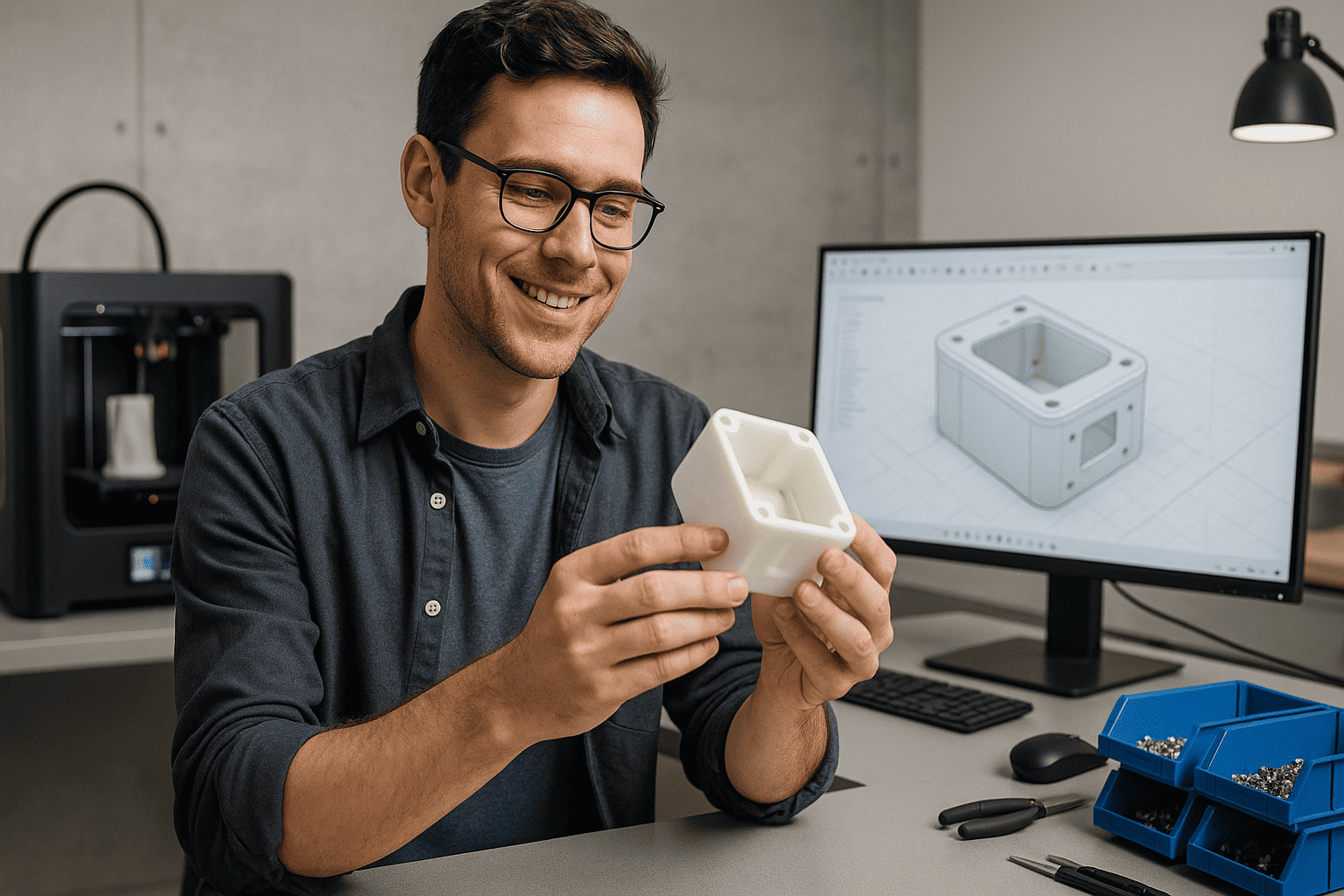
Startups don’t have time—or cash—to waste.
For product inventors and e-commerce entrepreneurs, the challenge is clear: how to turn an idea into a physical product without blowing $10,000 or waiting six months. That’s where small batch and low-volume manufacturing come in.
This guide breaks down how budget-conscious founders can build, test, and launch with minimal risk using fast, affordable prototyping and short-run production.
Why Traditional Prototyping Doesn’t Work for Lean Inventors
Most manufacturing pipelines aren’t built for startups. They cater to big brands with large budgets and massive MOQs (minimum order quantities).
Common problems startup founders face:
- $10K+ quotes just to build a prototype
- 500+ unit minimums from overseas factories
- Weeks of back-and-forth with unclear timelines
- Zero flexibility for iterative development
For early-stage entrepreneurs, that’s a non-starter. You don’t need mass production—you need 20 to 100 solid units to test demand, prove functionality, and start selling.
What Is Small Batch Production?
Small batch production means manufacturing low quantities—typically 20 to 500 units—of a product. For inventors, it’s the bridge between prototype and full-scale manufacturing.
Unlike traditional mass production, small batch services:
- Let you validate product-market fit early
- Minimize financial risk
- Allow fast iterations based on customer feedback
- Work with tight timelines (e.g., Kickstarter, Amazon, or seasonal launches)
This model is especially useful for e-commerce sellers, hardware startups, and lean innovators.
Why Low-Volume Manufacturing Works for Budget-Conscious Inventors
Founders don’t need perfection at the start. They need proof: Does the product work? Will customers buy it?
Here’s how low-volume services solve the biggest pain points:
1. Affordable Prototyping
- Instead of paying $10K upfront, services like PrototyperLab offer $25/hour pricing plus materials.
- Build a working prototype in as fast as 7 days using 3D printing, CNC machining, or vacuum casting.
2. Small Production Runs
- Start with as few as 20 units to test on Shopify, Amazon, or with early beta testers.
- No need to order hundreds before you know what works.
3. Faster Time to Market
- After prototype approval, production takes 30 days or less.
- Ideal for crowdfunding campaigns or market trials.
4. U.S.-Based Legal Safety, Vietnam-Based Costs
- Contracts and billing are handled in the U.S.
- Manufacturing and engineering in Vietnam = lower costs without sacrificing quality.
From Sketch to Shelf: How the Process Works
Here’s how a lean product development cycle looks using small batch services:
- Consultation
- Share your product idea, goals, timeline, and target unit count.
- Quote & Design
- Get a transparent quote for engineering hours and materials.
- Review CAD designs or renderings before production.
- Prototype
- Receive a physical prototype in 7 days.
- Test for function, fit, and usability.
- Iteration & Finalization
- Make improvements and lock in the final version.
- Small Batch Production
- Build 20–100 units for launch, pre-orders, or investor demos.
- Logistics
- Receive finished products with full quality inspection and international shipping handled.
- Receive finished products with full quality inspection and international shipping handled.
When to Use Small Batch Manufacturing
You should consider small batch and low-volume services if you:
- Have a validated concept but a limited budget
- Need to test a product on Amazon, Shopify, or Kickstarter
- Want to avoid large upfront commitments
- Need to launch fast and learn quickly
- Are seeking investor or customer feedback with real, working units
This approach isn’t for mass retailers—but it’s perfect for lean, smart growth.
What It Costs (and What It Doesn’t)
Typical prototyping firms bury founders in vague pricing. At PrototyperLab, pricing is simple:
- $25/hour for engineering and design
- Material costs billed at cost—no markup
- No payment required until the quote is approved
- No extra charges if timelines slip (on their end)
It’s built for transparency and trust, not surprise invoices.
How It Helps You Launch Without the Risk
Testing a new product should be fast and financially controlled—not a $20K gamble. With prototyping on a budget, founders can:
- Move from idea to prototype in under 10 days
- Validate before they manufacture
- Stay agile without committing to 1,000+ units
- Launch with confidence, not debt
This is how modern inventors get to market.
Ready to Build on a Budget?
If you’re an e-commerce entrepreneur or solo founder trying to bring a product idea to life without burning cash, PrototyperLab offers a clear path:
- 7-day prototyping
- Small batch production (20+ units)
- $25/hour transparent pricing
- U.S. legal protection, Vietnam-based manufacturing
Launch smarter. Test faster. Spend less.
Get A Quote Now
FAQs
What’s the cheapest manufacturing method for prototypes?
3D printing and vacuum casting are often the most cost-effective for functional prototypes. They require no molds and are fast to iterate.
How fast can I produce 50 units of a prototype?
With a finalized design, you can expect a 30-day turnaround for 20–100 units using low-volume production methods.
Can I prototype and manufacture the same product with one partner?
Yes. PrototyperLab handles everything from CAD design and prototyping to low-volume manufacturing, quality control, and logistics.