
Consumer Electronics and Embedded Systems Prototyping
PCB design, firmware, enclosure, and small batch production — all in one team. For hardware startups, product designers, and Amazon sellers.
Starting from
$3,000+
single-feature electronics product

Example 1 — portable LED product
Architect Max Gunawan had no electronics background. After extensive prototyping he produced a lamp that unfolded from a hardcover book — LED modules, rechargeable 8-hour battery, and a USB charging port — with the opening angle acting as the power switch. PCB, battery, and wood enclosure designed as one system. All five Sharks made competing offers. Robert Herjavec invested $350,000 for 10%. $5M/year revenue. Sold in MoMA stores.
$578,387 raised | LED circuit + 8-hr battery + USB charge | $5M/year
Example 2 — Bluetooth embedded product
Four tactile switches and a Bluetooth LE module on a custom PCB. The wood enclosure was machined to precise tolerances for correct button travel and antenna clearance — PCB footprint and wood geometry designed together from day one. 800+ remotes sold in 30 days. Second production run of 1,000 units in mahogany and rosewood.
Custom PCB | BLE firmware | CNC mahogany and rosewood | 800+ in 30 days

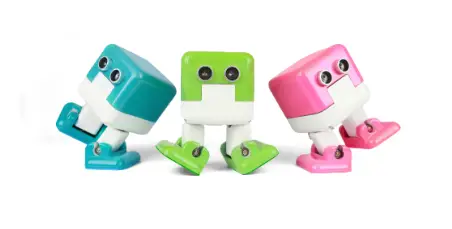
Example 3 — modular STEM robotics / education hardware
Torotic set out to solve a real problem in children’s coding education: students write code but rarely see it work in the physical world. PrototyperLab supported Torotic through concept, electronics design, firmware, 3D-printed enclosures, and a custom Blockly integration.
The CenterCube Core Unit serves as the modular hub. Students attach plug-and-play input modules (sound sensor, distance sensor, button, IR receiver) and output modules (LED screen, multicolor LED, speaker) without any wiring knowledge.
Total: 690 engineering hours — 360 on hardware, 70 on firmware, 260 building a 150-hour STEM curriculum. 20-unit minimum production run to validate demand.
“We wanted a functional, expandable robot that didn’t blow our budget. PrototyperLab helped us make it real — fast.” — Torotic founder
Hardware: 690 engineering hours | Modules: CenterCube + plug-and-play | Curriculum: 150 hours
01
Reference products, block diagrams, or sketches. Primary functions, power requirements, target size, and regulatory markets scoped accurately.
Brief confirmed within 24 hours
02
PCB design, firmware, component sourcing, enclosure, and assembly — all quoted separately so you see each line cost before committing.
Itemized quote with milestone plan
03
PCB layout and enclosure CAD run in parallel. Milestone updates at schematic review, first power-on, firmware validation, and enclosure fit check.
Prototype in 2 to 5 months
Client Reviews
★★★★★
PrototyperLab were quick and efficient — had our first prototype ready in just two weeks. The whole process was low-risk, making it easy to test new products with our existing customers. At first, I thought we’d use them for development and then move mass production to our factory in China, but their pricing was very competitive. Keeping production with PrototyperLab meant better quality control and ongoing improvements, so there was no reason to take the risk of moving it elsewhere.

Jared Stephens
UNICONFETTI, Entrepreneur, UK
★★★★★
We found PrototyperLab through a recommendation from another brand, and to be honest, we weren’t sure what to expect. We shared one of our new product ideas and its use case, and within a few days, they had a physical plastic prototype ready. I was seriously impressed. The pricing is super reasonable, which means we can test out even more product ideas, especially those with electronics or automation. It’s a huge time-saver for us, letting our team focus more on launching and marketing instead of getting stuck in long development cycles.

Danne
OWLHAUS, Founder, US
★★★★★
Superb company and service. Tai and his team have been super helpful, responsive and hands on in assisting with prototype design and production, rapid turnaround on queries and fairly priced. I continue to use them beyond the initial services I engaged them on. Trust worthy and reliable. Highly recommend.
Chico Hunt
Entrepreneur, Dubai
★★★★★
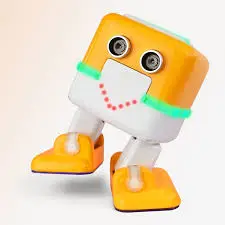
We wanted a functional, expandable robot that didn’t blow our budget. PrototyperLab helped us make it real — fast. 690 engineering hours covering hardware, firmware, and a 150-hour STEM curriculum developed alongside the product. The 20-unit production run validated demand before we committed to scaling.
Torotic Founder
TOROTIC, Education Hardware, Vietnam
★★★★★
…From day one, they’ve treated my project with professionalism, honesty, and genuine enthusiasm. Communication has been outstanding, they’re upfront about costs and timelines, and they’ve made the entire process feel approachable for a solo entrepreneur… They can help with the entire journey—from an idea, to design, prototyping, manufacturing, and even guidance on e-commerce and fulfillment. If you’re a small business owner, inventor, or entrepreneur looking for a team that truly supports you, I highly recommend them. I’m already looking forward to working with them on my next product.

Kai
Kai Land Press LLC, Atlanta, GA
Our Guarantee
We believe in fair, transparent, and results-driven partnerships. Here’s what you can count on.
01
Getting a quote is fast, hassle-free, and completely risk-free. You won’t pay a dime until you approve the full project estimate.
02
If we take longer than the quoted hours to complete your project, you won’t pay for the extra time. The quoted hours are the ceiling, not an estimate.
03
We don’t just build prototypes — we ensure they function as intended before delivery. You receive a working product, not a visual model.
04
Your prototype will be in your hands within the agreed timeline. If something changes on our end, we tell you immediately — not after the fact.
05
We don’t mark up material or production costs. Our entire profit margin comes only from our engineers’ $25/hr rate. Materials are passed through at cost.
06
We are a US-registered company. All contracts and payments are handled within the US, so there’s no risk of dealing with international disputes or unenforceable agreements.
07
You approve CAD designs, prototype photos, and production samples before we proceed to the next stage. No stage begins without your sign-off. No black boxes, no surprises.
08
Your project gets one or two dedicated engineers from start to finish. No sales reps, no account managers, no communication layers — just you and the people actually building your product.
Smart home devices, wearables, handheld gadgets, wireless remotes, audio products, LED and lighting systems, battery-powered tools, educational electronics, and embedded control systems. If it has a PCB and an enclosure, we build it.
Yes. We review your connectivity requirements, processing needs, power budget, and form factor constraints and recommend the right chipset. We have experience with ESP32, nRF52, STM32, RP2040, and other common MCU families.
Yes. Full schematic design, PCB layout, BOM generation, component sourcing, and assembly in-house. We do not outsource PCB work.
Enclosure and PCB are designed together from day one. We model the PCB footprint in CAD before the enclosure geometry is finalized to ensure correct fit, button travel, antenna clearance, and thermal management.
Yes. Once your prototype is approved, we move directly to small batch production using aluminum molds for plastic enclosures, PCB panel assembly, and firmware flashing. The same team handles the full journey.
Have questions about payment terms, refunds, or shipping? Visit our full FAQ page.
Service
20 to 100 units. Production price per unit, quoted per project.
Quoted per project
Service
Real injection-molded plastic parts from 50 units. Aluminum molds.
From $500/mold
Service
Production-scale steel molds for volume manufacturing.
From $3,000
Service
CNC hardwood, flatpack design, and electronics in wood.
From $1,000
Service
PCB, firmware, wireless connectivity, and enclosure in one team.
From $3,000
Service
Concept to tested, CPSC-compliant prototype and small batch production.
From $2,500
Service
Payment terms, refunds, shipping, and process questions.
prototyperlab.com/faq/
Additional Service
Engineer your product to ship flat, reduce dimensional weight, and cut Amazon FBA fees.
Quoted per project
Additional Service
Turn a concept sketch into a production-ready design reviewed for manufacturability.
Quoted per project
Additional Service
Already in production but the per-unit cost is too high? We find savings without touching quality.
Quoted per project
Additional Service
Amazon niche and competitor analysis, customer survey design, and demand validation.
Quoted per project
Additional Service
Retail-ready packaging, mailer boxes, custom inserts, and FBA-compliant prep.
From $1,000
Additional Service
Prior art search, patentability assessment, design-around strategy, and US patent filing guidance.
Quoted per project