IoT products like what you are thinking of building
Three real connected products that started with the same challenges yours does now.
Example 1 — Bluetooth IoT / smart home device
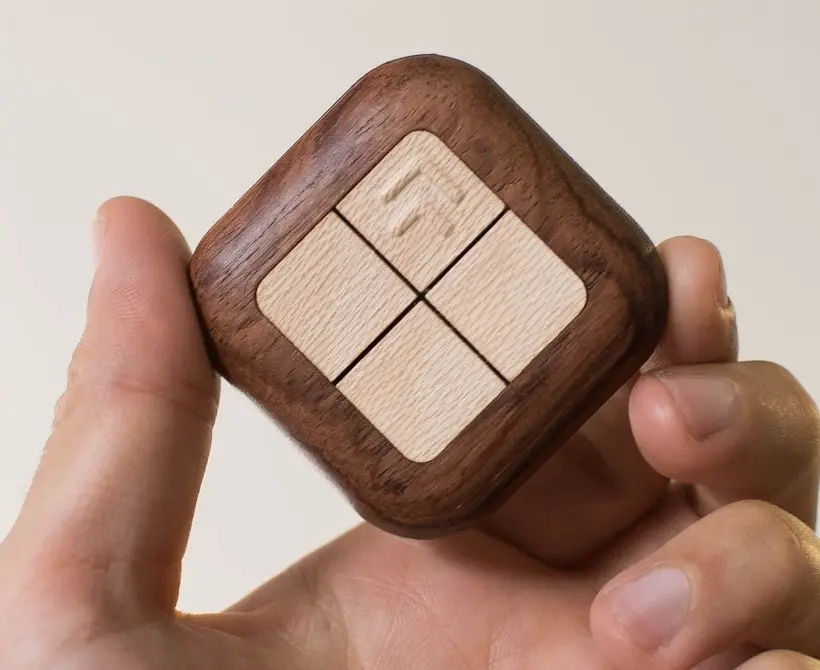
Turn Touch — a wooden Bluetooth smart home remote that surpassed its $25,000 Kickstarter goal
Samuel Clay wanted a remote to control Philips Hue lights and Sonos speakers without picking up his phone. Every remote on the market was cheap plastic. He wanted something that looked like furniture. So he built it.
A custom PCB with four tactile switches and a BLE module, housed in CNC-machined mahogany. The PCB footprint and wood enclosure were designed together from day one. He sold over 800 remotes in 30 days, well past his $25,000 Kickstarter goal. Now in a second production run of 1,000 units in mahogany and rosewood.
Connectivity: BLE | Enclosure: CNC mahogany and rosewood | 800+ units in 30 days
Example 2 — LED electronics IoT / rechargeable device
Lumio — rechargeable LED lamp in a book enclosure, $578K on Kickstarter
Architect Max Gunawan had no electronics background. After extensive prototyping he produced a lamp that unfolded from a hardcover book — LED modules, rechargeable battery, and a hinge that doubled as the power switch. All five Sharks made competing offers. Robert Herjavec invested $350,000 for 10% equity. Lumio generates $5 million a year and is sold in MoMA stores.
$578,387 raised | 8-hour battery | $5M/year | Sold in MoMA
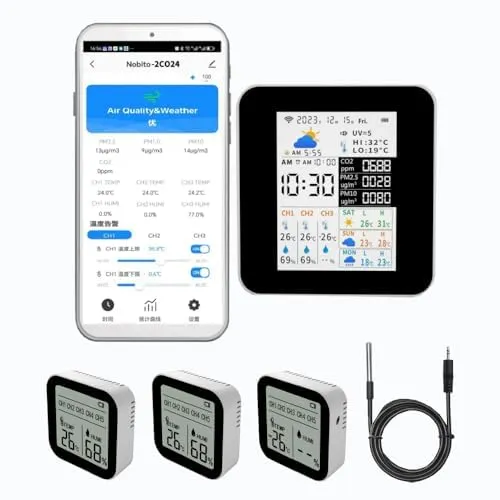
Connected air quality monitor — from brief to Amazon FBA in 6 months
A product designer wanted an accurate home air quality monitor at consumer price — no firmware or PCB experience. The device needed PM2.5, CO2, temperature, and humidity sensors, WiFi, and an e-ink display inside a housing smaller than a deck of cards. Six months from first brief to approved prototype. A 50-unit batch sold out on Amazon in two weeks.
Block diagrams, reference devices, or sketches. Connectivity, sensors, battery life, and enclosure requirements. We scope hardware and firmware accurately.
Brief confirmed within 24 hours
02
Receive itemized quote within 48 hours
PCB design, firmware, component sourcing, enclosure design, and assembly all quoted separately. FCC and CE pre-compliance flagged upfront.
Itemized quote with milestone plan
03
Pay deposit — milestone updates at every stage
PCB layout and enclosure CAD run in parallel. Updates at PCB review, first power-on, firmware validation, and fit check. No black boxes.
Working prototype in 3 to 6 months
Client Reviews
What our clients say
★★★★★
PrototyperLab were quick and efficient — had our first prototype ready in just two weeks. The whole process was low-risk, making it easy to test new products with our existing customers. At first, I thought we’d use them for development and then move mass production to our factory in China, but their pricing was very competitive. Keeping production with PrototyperLab meant better quality control and ongoing improvements, so there was no reason to take the risk of moving it elsewhere.
Jared Stephens
UNICONFETTI, Entrepreneur, UK
★★★★★
We found PrototyperLab through a recommendation from another brand, and to be honest, we weren’t sure what to expect. We shared one of our new product ideas and its use case, and within a few days, they had a physical plastic prototype ready. I was seriously impressed. The pricing is super reasonable, which means we can test out even more product ideas, especially those with electronics or automation. It’s a huge time-saver for us, letting our team focus more on launching and marketing instead of getting stuck in long development cycles.
Danne
OWLHAUS, Founder, US
★★★★★
Superb company and service. Tai and his team have been super helpful, responsive and hands on in assisting with prototype design and production, rapid turnaround on queries and fairly priced. I continue to use them beyond the initial services I engaged them on. Trust worthy and reliable. Highly recommend.
Chico Hunt
Entrepreneur, Dubai
★★★★★
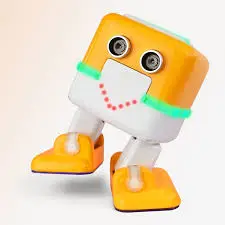
We wanted a functional, expandable robot that didn’t blow our budget. PrototyperLab helped us make it real — fast. 690 engineering hours covering hardware, firmware, and a 150-hour STEM curriculum developed alongside the product. The 20-unit production run validated demand before we committed to scaling.
Torotic Founder
TOROTIC, Education Hardware, Vietnam
★★★★★
…From day one, they’ve treated my project with professionalism, honesty, and genuine enthusiasm. Communication has been outstanding, they’re upfront about costs and timelines, and they’ve made the entire process feel approachable for a solo entrepreneur… They can help with the entire journey—from an idea, to design, prototyping, manufacturing, and even guidance on e-commerce and fulfillment. If you’re a small business owner, inventor, or entrepreneur looking for a team that truly supports you, I highly recommend them. I’m already looking forward to working with them on my next product.
Kai
Kai Land Press LLC, Atlanta, GA
Our Guarantee
What we promise on every project
We believe in fair, transparent, and results-driven partnerships. Here’s what you can count on.
01
No upfront payment until you approve the quote
Getting a quote is fast, hassle-free, and completely risk-free. You won’t pay a dime until you approve the full project estimate.
02
No extra charges for delays on our end
If we take longer than the quoted hours to complete your project, you won’t pay for the extra time. The quoted hours are the ceiling, not an estimate.
03
A fully tested, working product
We don’t just build prototypes — we ensure they function as intended before delivery. You receive a working product, not a visual model.
04
On-time delivery
Your prototype will be in your hands within the agreed timeline. If something changes on our end, we tell you immediately — not after the fact.
05
No hidden fees in production
We don’t mark up material or production costs. Our entire profit margin comes only from our engineers’ $25/hr rate. Materials are passed through at cost.
06
US-based contracts and legal protection
We are a US-registered company. All contracts and payments are handled within the US, so there’s no risk of dealing with international disputes or unenforceable agreements.
07
Milestone approval, every step
You approve CAD designs, prototype photos, and production samples before we proceed to the next stage. No stage begins without your sign-off. No black boxes, no surprises.
08
Direct engineer access on every project
Your project gets one or two dedicated engineers from start to finish. No sales reps, no account managers, no communication layers — just you and the people actually building your product.
Frequently asked questions
Do you write the firmware or just build the hardware?
We handle both. Our embedded engineering team writes firmware alongside the hardware design. PCB, enclosure, and firmware are treated as one integrated build, not handed off separately.
What wireless protocols do you work with?
WiFi (ESP32, RTL8720), Bluetooth LE (nRF52, ESP32), LoRa (SX1276), Zigbee, 4G/LTE cellular modules (SIM7600, EC21). We select the right protocol based on your range, power, and data rate requirements.
How do you handle FCC and CE regulatory compliance?
We flag likely compliance requirements at the brief stage and include testing costs in your quote. We work with FCC/CE pre-compliance test houses and can coordinate final certification testing after the prototype is approved.
How long does IoT product development take?
Simple single-protocol connected devices: 3 to 5 months. Multi-sensor, multi-protocol, or display-integrated devices: 5 to 9 months. Timeline depends on firmware complexity and number of hardware iterations.
Can I go from IoT prototype to small batch production with you?
Yes. Once your prototype is approved, we move to small batch production using the same engineering team. Enclosure tooling, PCB assembly, and firmware flashing are all handled in-house.