
Universal FAQ — PrototyperLab
Answers to the most common questions about our process, pricing, payment, IP, and how we work with clients across the US.
You submit your brief and answer our questionnaire. We review your requirements and send back an itemized quote within 48 hours. The quote covers design hours, materials, fabrication, electronics if applicable, and finishing. Once you approve the quote and pay your deposit, we agree on a milestone plan and a confirmed list of features and specs. You approve each milestone before we move to the next stage. The process continues until the prototype meets all agreed specs and you are ready to move to small batch production.
We send you high-quality photos and videos of the prototype at each milestone. We schedule a call to walk through any changes or improvements together. You have one point of contact throughout the project. All communication is in English. We use structured milestone approvals and written agreements so you always know exactly where your project stands.
As many as the project requires. Most projects go through multiple rounds of revisions and that is completely standard. We build, you review, we improve, and we repeat. Iteration is not a failure — it is the point of prototyping.
No. You never need to visit. We handle all communication remotely with milestone-based approvals, photos, videos, and calls. Clients across the US, UK, and Europe work with us entirely remotely with no issues.
We have never failed to complete a prototype due to our own inability. If we provide you a quote, it means we are confident we can deliver. We do not accept a deposit until we are certain the project is within our capabilities. In the unlikely event we could not complete the work, we would refund your deposit in full and be transparent about the reason.
Not for our clients. We handle all communication in English. You deal with one point of contact throughout the project. We use structured milestone approvals, written agreements, and video calls so you always know exactly where your project stands.
Ship to our US address in Atlanta, GA and we forward to Vietnam. Or ship directly to our Hanoi facility. We can guide you on the best shipping option for your specific items, including customs documentation for prototype samples.
Our base rate is $25 per engineering hour plus material costs. Every project is quoted individually with a full line-item breakdown showing how many hours each stage requires and what materials cost. Simple products require fewer hours. Complex electronics or multi-part products require more. You always approve the quote before any work begins.
50% deposit to start the project. The remaining 50% is due upon final delivery and your approval. We do not release final files or ship units until the final payment is received. We never ask for full payment upfront.
No. The 48-hour itemized quote is free and comes with no commitment. You only pay once you approve the quote and choose to proceed.
Bank transfer (ACH or wire), credit card, and PayPal. All payments are processed through our US entity. You never send money overseas.
If the project is cancelled before work begins, your deposit is refunded in full minus any materials already ordered. If the project is cancelled after work has begun, we invoice for hours worked and materials purchased up to that point. If we fail to deliver what was agreed, we refund in full.
No. We do not mark up material or production costs. Our entire profit margin comes from our engineering hours at $25/hr. Materials are passed through at our actual cost. The quote you approve is the invoice you receive — unless scope changes at your request.
If the extra time is due to our own process, we absorb it. You pay only for the quoted hours. If the project scope changes at your request — new features, material changes, additional iterations beyond what was agreed — we requote those additions and you approve before work continues.
You do. All CAD files, schematics, firmware, tooling designs, and any other work product created for your project belong to you once the project is paid in full. We work under work-for-hire terms. We do not share, license, sell, or reuse your designs for any other client or purpose.
Yes, always. We sign a mutual NDA before any project information is shared. The NDA is a US-law agreement between your entity and our US entity.
You do. The mold belongs to you from the moment the final invoice is settled. We store it at no charge for your production runs. We can ship it to any factory worldwide at any time with no restrictions.
Yes. All contracts and payments are handled through our US-registered entity under US law. You never deal with a foreign entity or foreign legal agreement.
No. Your designs are never shared with any third party without your written consent. Files are stored in access-controlled systems. Team members working on your project sign internal confidentiality agreements.
Consumer electronics, IoT and connected devices, injection-molded plastic products, wood and furniture products, children’s toys and educational products, household goods, ecommerce products for Amazon FBA, Kickstarter products, and custom hardware. If it has a physical form factor that can be prototyped and manufactured, we can likely build it.
Plastic (ABS, PP, PE, PC, nylon, TPE, PLA, resin), wood (ash, walnut, oak, teak, mahogany, maple, MDF, ply, bamboo), metal (steel, aluminum, copper, brass, stainless), natural fiber (rattan, bamboo), rubber, silicone, ceramic, epoxy, and fabric.
Yes. Industrial design comes first. It answers all the functional and aesthetic questions. Prototyping proves those answers work in the real world. A prototype built without proper design is an expensive mistake. We include DFM review on every prototype build.
Yes. We prepare your units to Amazon FBA standards including poly bagging, labeling, suffocation warnings, and carton labeling, then ship directly to the Amazon fulfillment center of your choice.
Yes. Children’s products require third-party CPSC lab testing and a Children’s Product Certificate before they can be sold in the US. We work with an accredited CPSC partner lab and include testing costs in your quote upfront. See our Children’s Products service page for full details.
Yes. We offer prior art searches, patentability assessments, design-around strategy, and US patent filing guidance as an additional service. We flag obvious patent risks at the design stage for every project, but formal patent research is a separate engagement. Ask about it when you submit your brief.
We ship via DHL, FedEx, or UPS from Vietnam to your US address. Shipping cost and lead time are included in your quote. For small batch production runs, we can also ship direct to Amazon FBA.
Express courier (DHL or FedEx): 3 to 5 business days to the US. Sea freight for larger production runs: 3 to 4 weeks. We recommend express courier for prototypes and small batches.
We handle Vietnamese export documentation. Import duties and customs clearance on the US side are your responsibility. For most prototype shipments, US import duties are minimal. We can advise on HTS codes and likely duty rates for your specific product category.
Yes. We prepare your units to Amazon FBA standards including poly bagging, FNSKU labeling, suffocation warnings, and carton labeling, then ship directly to the Amazon fulfillment center of your choice.
Client Reviews
★★★★★
PrototyperLab were quick and efficient — had our first prototype ready in just two weeks. The whole process was low-risk, making it easy to test new products with our existing customers. At first, I thought we’d use them for development and then move mass production to our factory in China, but their pricing was very competitive. Keeping production with PrototyperLab meant better quality control and ongoing improvements, so there was no reason to take the risk of moving it elsewhere.

Jared Stephens
UNICONFETTI, Entrepreneur, UK
★★★★★
We found PrototyperLab through a recommendation from another brand, and to be honest, we weren’t sure what to expect. We shared one of our new product ideas and its use case, and within a few days, they had a physical plastic prototype ready. I was seriously impressed. The pricing is super reasonable, which means we can test out even more product ideas, especially those with electronics or automation. It’s a huge time-saver for us, letting our team focus more on launching and marketing instead of getting stuck in long development cycles.

Danne
OWLHAUS, Founder, US
★★★★★
Superb company and service. Tai and his team have been super helpful, responsive and hands on in assisting with prototype design and production, rapid turnaround on queries and fairly priced. I continue to use them beyond the initial services I engaged them on. Trust worthy and reliable. Highly recommend.
Chico Hunt
Entrepreneur, Dubai
★★★★★
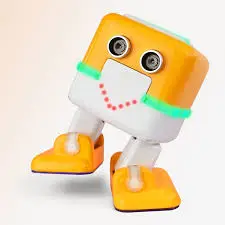
We wanted a functional, expandable robot that didn’t blow our budget. PrototyperLab helped us make it real — fast. 690 engineering hours covering hardware, firmware, and a 150-hour STEM curriculum developed alongside the product. The 20-unit production run validated demand before we committed to scaling.
Torotic Founder
TOROTIC, Education Hardware, Vietnam
★★★★★
…From day one, they’ve treated my project with professionalism, honesty, and genuine enthusiasm. Communication has been outstanding, they’re upfront about costs and timelines, and they’ve made the entire process feel approachable for a solo entrepreneur… They can help with the entire journey—from an idea, to design, prototyping, manufacturing, and even guidance on e-commerce and fulfillment. If you’re a small business owner, inventor, or entrepreneur looking for a team that truly supports you, I highly recommend them. I’m already looking forward to working with them on my next product.

Kai
Kai Land Press LLC, Atlanta, GA
Send us your idea and we will have a detailed, itemized quote back within 48 hours. No commitment required. NDA signed before anything is shared.
Service
20 to 100 units. Production price per unit, quoted per project.
Quoted per project
Service
Real injection-molded plastic parts from 50 units. Aluminum molds.
From $500/mold
Service
Production-scale steel molds for volume manufacturing.
From $3,000
Service
CNC hardwood, flatpack design, and electronics in wood.
From $1,000
Service
PCB, firmware, wireless connectivity, and enclosure in one team.
From $3,000
Service
Full-stack electronics: hardware, firmware, and enclosure.
From $3,000
Service
Concept to tested, CPSC-compliant prototype and small batch production.
From $2,500
Service
Payment terms, refunds, shipping, and process questions.
prototyperlab.com/faq/
Additional Service
Engineer your product to ship flat, reduce dimensional weight, and cut Amazon FBA fees.
Quoted per project
Additional Service
Turn a concept sketch into a production-ready design reviewed for manufacturability.
Quoted per project
Additional Service
Already in production but the per-unit cost is too high? We find savings without touching quality.
Quoted per project
Additional Service
Amazon niche and competitor analysis, customer survey design, and demand validation.
Quoted per project
Additional Service
Retail-ready packaging, mailer boxes, custom inserts, and FBA-compliant prep.
From $1,000
Additional Service
Prior art search, patentability assessment, design-around strategy, and US patent filing guidance.
Quoted per project