

Hardware is hard. But your first prototype doesn’t have to break the bank or take six months. Here’s what every hardware founder needs to know about prototyping—from machined metal and sheet metal enclosures to PCB assembly and beyond.
Why prototyping strategy matters more for startups
Unlike a Fortune 500 company with a dedicated R&D budget, a startup has exactly one resource it can’t recover: time. Every dollar spent on the wrong prototype at the wrong stage is a dollar that didn’t go toward the version that ships. And every week spent waiting on parts is a week your competitor might be closing a seed round.
The startups that prototype well share one habit: they match the fidelity of the prototype to the question being asked. You don’t need a CNC-machined aluminum enclosure to test whether your app’s UI makes sense. You don’t need an injection-molded housing to validate your circuit board design. But you do need a realistic, functional prototype before you walk into a room with investors or your first 50 customers.
The three prototype stages every hardware startup goes through
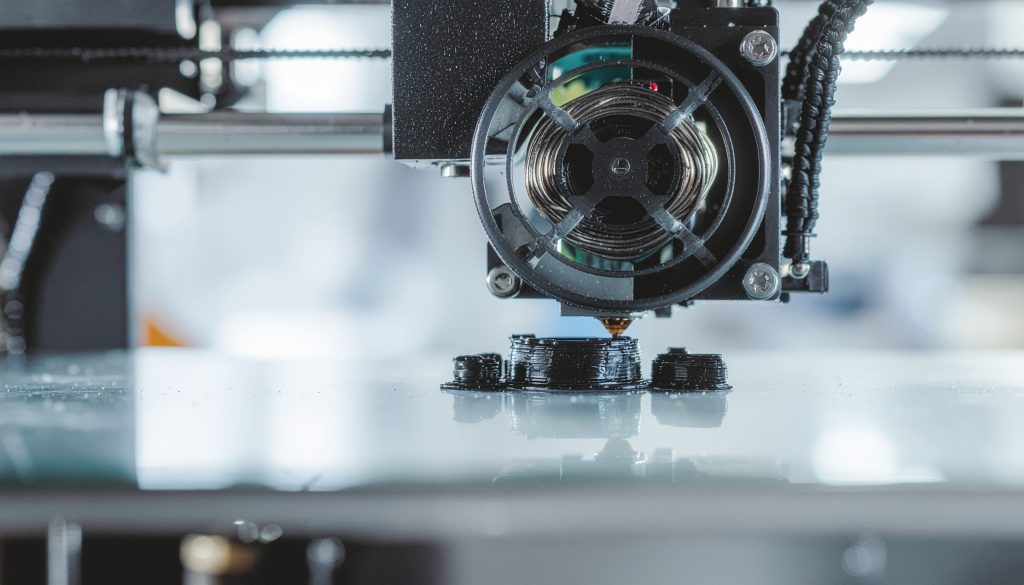
- Proof-of-concept (PoC): Does the core idea work? Rough, fast, cheap. FDM prints, breadboard circuits, off-the-shelf hardware.
- Looks-like / works-like: Does it look and feel like a real product? Machined or cast housings, assembled PCBs, real materials.
- Pre-production prototype: Is it manufacturable at scale? Near-production materials, tolerances, and assembly processes.
Matching the right technique to the right stage is the single biggest lever a hardware startup has on its prototyping budget.
The real cost of prototyping a product
One of the most common questions from first-time hardware founders is: “How much does it actually cost to prototype a product?” The honest answer is: it depends heavily on what stage you’re in, what the part is made of, and how fast you need it.
Here’s a realistic cost breakdown by technique for a typical startup prototype:
| Technique | Typical cost range | Lead time | Best startup use case |
|---|---|---|---|
| FDM 3D printing | $50–$500 | 1–3 days | Proof-of-concept, form models |
| SLA / resin printing | $100–$1,500 | 2–5 days | Visual prototypes, mold masters |
| Prototype machining (CNC) | $500–$5,000+ | 3–10 days | Functional metal parts, tight tolerances |
| Prototype sheet metal | $300–$3,000 | 3–7 days | Enclosures, chassis, brackets |
| Urethane casting | $800–$4,000 | 7–14 days | Pre-production runs of 5–50 units |
| PCB prototype + assembly | $200–$2,000 | 5–14 days | Electronics validation, investor demos |
What drives cost up: tight tolerances, exotic materials, complex geometry, low quantities, and short lead times. What drives cost down: early DFM (design for manufacturing) review with your prototyping partner, batching multiple iterations into one order, and using standard material specs wherever possible.
A common mistake: over-specifying tolerances on a PoC prototype. If you’re just testing whether the enclosure fits your hand, you don’t need ±0.001” CNC tolerances. Save the precision—and the cost—for later stages.
Prototype machining: when you need more than plastic
3D printing is a powerful starting point, but it has real limits. Printed plastic parts can’t replicate the strength, thermal performance, or surface quality of metal. When your prototype needs to behave like the final product—not just look like it—prototype machining is the answer.
CNC (computer numerical control) machining is a subtractive process: a computer-controlled cutter removes material from a solid block of metal, plastic, or composite to produce a precise part. It’s faster and cheaper than production tooling, and it produces parts that are genuinely production-representative.
When to use prototype machining
- Your part needs to withstand mechanical load, heat, or repeated use
- Tolerances matter—your part interfaces with other components that have tight fit requirements
- You need to test with the actual production material (aluminum, steel, brass)
- You’re preparing a mold master for urethane casting or low-volume injection molding
Material choices for machined prototypes
- Aluminum 6061: The most common choice. Lightweight, strong, machines beautifully. Great for enclosures, brackets, and structural parts.
- Steel (4140, 303 stainless): Stronger and harder than aluminum. Use when the part needs to withstand high stress or corrosion.
- Brass: Excellent for connectors, fittings, and parts that need good electrical conductivity or a premium feel.
- Delrin / PEEK: Engineering plastics that machine well and offer better performance than printed parts.
Expect machined prototype lead times of 3–10 business days for standard requests. Rush options (24–48 hours) are available from most shops at a premium. For Atlanta-area startups, working with a local machining partner can dramatically compress iteration cycles.

Prototype sheet metal: enclosures, chassis & structural parts
If your product has an enclosure, panel, rack mount, bracket, or any structural frame, sheet metal prototyping is almost certainly in your future. It’s the standard path for hardware products that need a metal outer shell—from IoT devices and industrial controllers to consumer electronics and medical equipment housings.
The typical prototype sheet metal process is: laser cutting (or waterjet for thicker stock) followed by CNC bending and welding or fastening. This produces parts that are functionally identical to production stamped parts—the difference is per-unit cost, not quality.
Design tips for sheet metal prototypes
- Bend radius: Keep bend radius equal to or greater than your material thickness. Tighter bends crack or distort the metal.
- Hole placement: Keep holes at least 2x the material thickness away from any bend line.
- Material thickness: 16–18 gauge steel and 0.063–0.090” aluminum are the most common prototype specs. Thinner = lighter and cheaper; thicker = stronger and more expensive.
- Hardware inserts: Plan for PEM nuts or rivet nuts in the CAD file—don’t design threaded holes directly into thin sheet metal.
Transitioning from sheet metal prototype to production
Sheet metal prototypes made by laser cutting and bending transition naturally to production stamping and progressive die work. The geometry is identical—only the manufacturing method changes at volume. This makes sheet metal one of the most “production-honest” prototype methods available to a hardware startup.
Rapid prototyping PCB assembly & prototype PCB boards
For electronics hardware startups, the PCB prototype is often the most critical—and most misunderstood—part of the development process. Getting your first prototype PCB board right can save weeks and thousands of dollars. Getting it wrong compounds across every subsequent revision.
What a prototype PCB run actually looks like
The standard process starts with your Gerber files (the fabrication-ready output from your PCB design tool like KiCad, Altium, or Eagle). Those files go to a PCB fab house, which produces the bare boards. Then a PCBA (PCB Assembly) provider sources components, applies solder paste, places components, and runs the boards through a reflow oven.
For prototype quantities, most founders order 5, 10, or 25 boards. Five is often enough for initial functional testing. Ten gives you enough to share with co-founders, advisors, and early testers. Twenty-five is a reasonable pre-seed demo quantity.
Bare board vs. PCBA: what you need at each stage
| Stage | What you need | Why |
|---|---|---|
| PoC / schematic validation | Bare board + hand assembly | Fast, cheap, easy to rework |
| Functional prototype | Prototype PCBA (full assembly) | Tests real-world performance and thermals |
| Investor / customer demo | Full PCBA, conformal coating optional | Professional appearance, reliable operation |
| Pre-production | Production-intent PCBA with test fixtures | Validates manufacturing process, not just design |
SMT vs. through-hole for prototypes
Surface-mount technology (SMT) is the default for most modern electronics—smaller, faster to assemble, and cheaper at volume. Through-hole components are larger and easier to hand-solder, making them useful for early PoC work where you’re modifying and reworking boards frequently. Most prototype PCBs use a mix: SMT for ICs and passives, through-hole for connectors and large components.
Lead times for PCB prototypes
- Standard bare board fabrication: 7–10 business days
- Expedited bare board: 24–72 hours (significant premium, worth it for critical path items)
- Standard PCBA (board + assembly): 10–14 business days
- Expedited PCBA: 5–7 business days with rush pricing
One often-overlooked cost driver: component availability. If your BOM (bill of materials) includes long-lead or allocation-constrained parts, your prototype timeline is driven by parts, not fab. Always check lead times on critical ICs before locking your design.
Building your prototyping budget as a startup
Most pre-seed hardware startups budget $10,000–$50,000 for their first full prototype cycle, depending on product complexity. That sounds like a lot—and it can be—but it’s far less than the cost of going into production with an unvalidated design.
A sample budget breakdown for a first hardware prototype
| Item | Estimated cost | Notes |
|---|---|---|
| FDM prints (form models, 2–3 iterations) | $200–$600 | Early stage only |
| Prototype machining (1–2 CNC parts) | $1,000–$4,000 | Functional metal components |
| Sheet metal enclosure prototype | $500–$2,500 | Laser cut + bent |
| Prototype PCB board (10 bare boards) | $150–$400 | Gerbers to fab house |
| PCBA (10 boards assembled) | $800–$2,000 | Includes components + assembly |
| Urethane cast units (10–25 units) | $2,000–$6,000 | For investor / customer demos |
| Engineering / DFM review | $500–$2,000 | Highly recommended |
How to phase your spending
- Don’t prototype everything at once. Validate the riskiest assumption first—whether that’s the circuit, the enclosure, or the user interaction.
- Batch iterations. Instead of ordering one part at a time, batch 2–3 design variants into a single order to amortize setup costs.
- Use your prototyping partner’s DFM feedback before finalizing designs. Catching a problem on a prototype saves 10x the cost of catching it in production.
For investor optics: you don’t need a fully polished prototype for a pre-seed pitch. You need something that demonstrates the core value proposition works. A functional PCB in a rough 3D-printed housing is often enough—save the polished urethane cast units for your seed round.
Finding a prototyping partner in Atlanta, GA
For hardware startups in the Southeast, Atlanta offers a growing ecosystem of prototyping and manufacturing service providers. The advantage of working locally isn’t just convenience—it’s iteration speed. When you can drive parts across town instead of shipping them overnight, you compress your development timeline significantly.
The ideal Atlanta prototyping partner for a hardware startup is a full-service shop that handles mechanical prototyping (FDM, SLA, CNC machining, sheet metal) alongside electronics work (PCB fabrication and assembly). This one-roof model keeps your design data in one place, eliminates hand-off errors between vendors, and gives you a single point of contact for your entire prototype.
Questions to ask before choosing a prototyping partner
- Do you offer a DFM review before quoting? (A good partner flags problems, not just builds to spec.)
- What’s your standard lead time, and what does rush look like?
- Can you support low-volume production runs (10–500 units) when we’re ready?
- Do you have experience with my product category (consumer electronics, medical, industrial)?
- Can you handle PCB assembly in addition to mechanical prototyping?
The best prototyping partners treat early-stage startups as long-term relationships, not one-off transactions. They’re invested in your success because your production ramp is their future business.
Frequently asked questions
How much does it cost to prototype a product as a startup?
A full first prototype cycle—including 3D prints, machined parts, sheet metal, and PCB assembly—typically costs $5,000–$20,000 for a hardware startup. Individual components range from under $100 for a simple FDM print to $5,000+ for a complex machined metal part. Costs scale with complexity, material, quantity, and speed.
What is prototype machining used for?
Prototype machining (CNC) is used when a part needs to be made from metal or engineering plastic, requires tight dimensional tolerances, or needs to behave like the final production part under real-world conditions. It’s common for structural components, enclosures with precise fit requirements, and mold masters for urethane casting.
What’s the difference between a prototype PCB board and a production PCB?
A prototype PCB board is fabricated in small quantities (typically 5–25 units) to validate the circuit design before committing to production volumes. The board design is identical—what changes is quantity, assembly process rigor, and testing protocols. Production PCBs go through more extensive incoming inspection, automated optical inspection (AOI), and in-circuit testing.
What is rapid prototyping PCB assembly?
Rapid prototyping PCB assembly (PCBA) is the process of fabricating and populating a circuit board in a short timeframe—typically 5–14 days from Gerber files to assembled boards. It includes solder paste application, component placement (SMT and/or through-hole), reflow soldering, and basic functional testing. Expedited options can deliver assembled boards in as little as 3–5 days.
When should a startup move from prototyping to small-batch production?
Move to small-batch production when your design is functionally validated, stable (no more major changes planned), and you need 10–500 units for customer pilots, investor demonstrations, or early sales. Don’t rush this transition—locking a design with unresolved DFM issues is one of the most expensive mistakes a hardware startup can make.
Where can I find rapid prototyping services for a startup in Atlanta, GA?
Atlanta has a growing network of full-service prototyping providers that serve hardware startups. Look for shops offering CNC machining, sheet metal fabrication, 3D printing, and PCB assembly under one roof. Ask about DFM review, lead times, and experience with low-volume production—the right partner grows with you from prototype to production.
Ready to build your first hardware prototype?
From your first PCB to a 100-unit pilot run, a full-service Atlanta prototyping partner can take you further, faster. Request a quote today.