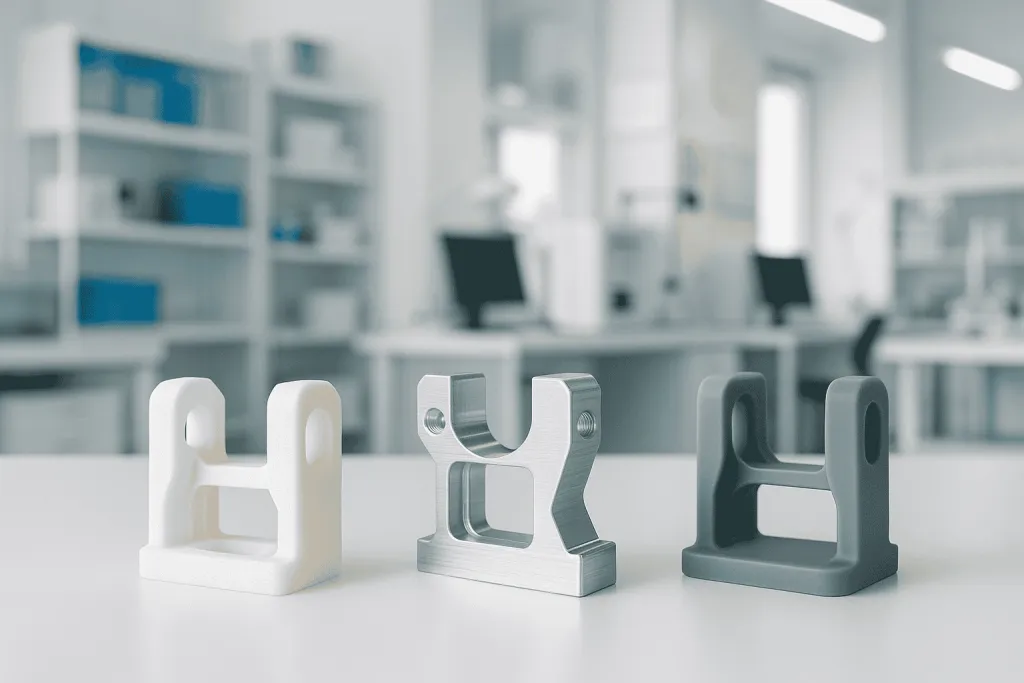
Choosing the right material for your prototype can be the difference between a fast, affordable test and an expensive misstep. For early-stage founders, the challenge is clear: how do you balance cost, speed, and durability when selecting materials for your first prototype?
Here’s a straightforward breakdown of the most common prototype materials, their strengths and limitations, and how to decide which one works for your idea.
Why Material Choice Matters
Founders often underestimate how much material selection impacts:
- Cost per unit—Plastics are cheap, metals are durable but costly.
- Speed of prototyping—Some materials work well with rapid processes like 3D printing.
- Functionality—If your prototype needs to survive stress testing, material strength matters.
- Scalability—The material chosen for your prototype may inform future manufacturing decisions.
Making the wrong choice can mean wasting time and money before you even test your idea.
Common Prototype Materials
1. Plastics (ABS, PLA, Nylon)
- Best for: Early concept models, low-cost testing, consumer product enclosures.
- Pros: Fast to produce with 3D printing, inexpensive, easy to iterate.
- Cons: Limited strength and heat resistance. Not suitable for heavy-load testing.
Example: A founder testing an IoT gadget enclosure might start with PLA prototype parts printed in a day.
2. Metals (Aluminum, Stainless Steel)
- Best for: Functional testing where strength, precision, or durability is critical.
- Pros: Strong, long-lasting, ideal for CNC machining and structural parts.
- Cons: More expensive, slower turnaround than plastics.
Example: A fitness startup building a mechanical resistance tool may need an aluminum prototype to validate durability.
3. Resins (Photopolymer)
- Best for: High-detail, smooth-surface parts like wearables, jewelry, or small consumer electronics.
- Pros: Excellent detail and surface finish via SLA 3D printing.
- Cons: Brittle, not great for functional stress testing.
Example: A fashion tech founder could print a resin prototype for a sleek wearable design.
4. Composites (Carbon Fiber, Glass-Filled Plastics)
- Best for: Lightweight but strong components.
- Pros: High strength-to-weight ratio, ideal for drones, robotics, or sports gear.
- Cons: More expensive, requires specialized equipment.
5. Wood & Foam (Concept Models)
- Best for: Rough, non-functional prototypes and visual mockups.
Pros: Very inexpensive, fast to shape, great for size/fit demonstrations. - Cons: Not durable, not suitable for functional testing.
How to Choose the Best Material for Your First Prototype
When deciding, founders should weigh three key factors:
- Purpose of Prototype
- If you’re testing function → go with metals or engineering plastics.
- If you’re testing appearance/fit → PLA, resin, or foam are sufficient.
- Budget & Timeline
- For speed: PLA or ABS via 3D printing.
- For durability: aluminum or nylon, even if cost is higher.
- Future Production Plans
- If you plan to mass-produce in plastic, start with a plastic prototype.
- If your end product requires strength, prototype with CNC aluminum.
Rapid Prototyping Makes It Easier
Modern rapid prototyping services allow founders to experiment with materials without breaking the bank. With options like 3D printing, CNC machining, and silicone molding, you can:
- Get a prototype in 30 days
- Test multiple material options before committing
- Move into small batch manufacturing (as few as 20 units) when ready
This way, you avoid the risk of overcommitting to the wrong material early on.
What’s the Best Material for Your First Prototype?
There is no one-size-fits-all answer to the best material for a prototype. The right choice depends on your product’s purpose, budget, and testing needs. For many founders, starting with affordable plastics makes sense for quick validation. For others, metals or composites are worth the investment to prove durability.
The key is speed and adaptability—use rapid prototyping to get results fast, learn from real-world testing, and adjust before scaling.
Need help choosing the right material for your first prototype? Get expert guidance and a prototype in 30 days—with the option to test multiple materials and move into 20-unit small batch production without risk.
Get Your Prototype Quote
Frequently Asked Questions About Prototype Materials
1. What is the best material for a first prototype?
The best material depends on your goal. Plastics like PLA or ABS are ideal for quick, low-cost prototypes, while aluminum is better for durable, functional testing. Resin is a strong choice if you need high detail.
2. What is the cheapest material for prototyping?
PLA plastic is generally the cheapest and fastest material for prototypes. It can be 3D printed within hours, making it popular for early-stage testing where speed and budget are priorities.
3. Is PLA good for prototypes?
Yes, PLA is excellent for concept models and fit checks because it’s inexpensive and easy to print. However, it’s brittle compared to ABS or nylon, so it’s unsuitable for prototypes needing durability or stress testing.
4. Should I use plastic or metal for my prototype?
Plastic prototypes are best when testing design, fit, and appearance at a low cost. Metal prototypes are better if your product needs to withstand heavy use, pressure, or durability testing. Many founders started with plastic and then moved to aluminum for functional validation.
5. What material is best for rapid prototyping?
For most consumer products, ABS or PLA plastics work best for rapid prototyping because they’re affordable, fast to print, and easy to modify. CNC aluminum is also a common choice for precision or strength, though more costly.
6. Can I test multiple materials for one prototype?
Yes, many startups test different materials for the same prototype design. For example, an early model might be 3D printed in PLA for shape validation, then CNC machined in aluminum for functional testing.
7. How do I choose the right material for my prototype?
Ask three key questions:
- Do I need to test the function or just the appearance?
- What’s my budget for this stage?
- Will this material scale to production later?
Answering these helps narrow down whether plastics, metals, or composites are the right fit.
Send over a sketch, a CAD file, or just a description of what the product needs to do. A real quote comes back within 48 hours.
Get a free quote