
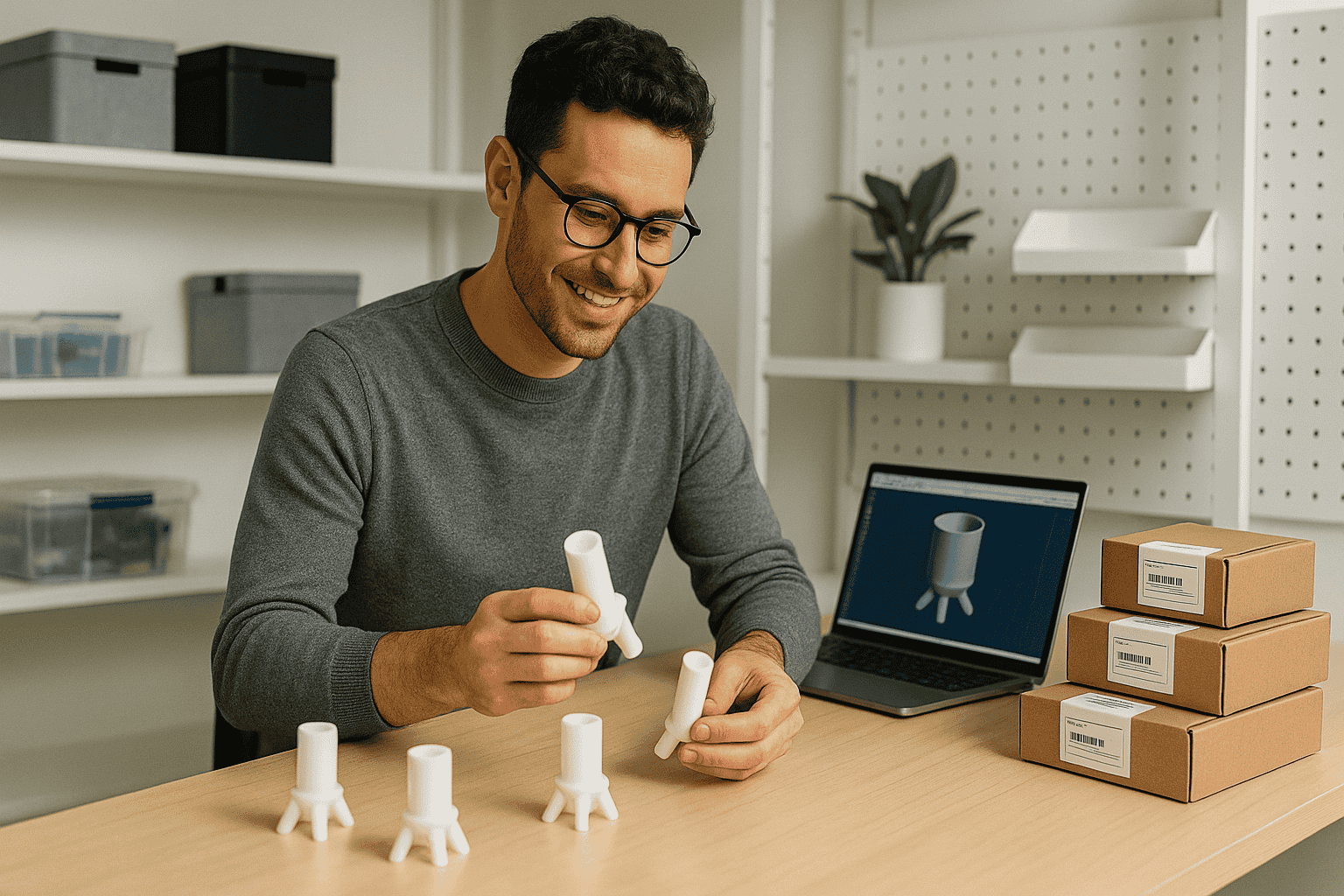
How do you launch a product without risk? The answer is simple: small batch manufacturing.
For startup founders and e-commerce entrepreneurs, turning an idea into a tangible product comes with real risk. Prototyping can eat up cash. Manufacturing partners demand 500-unit minimums. And worst of all, there’s no guarantee the product will sell once it’s live.
Small batch manufacturing flips that script. Instead of betting big from the start, it allows founders to build a testable product, launch small, and validate demand before scaling.
What Is Small Batch Manufacturing?
Small batch manufacturing refers to producing a limited quantity of a product—often 20 to 100 units—instead of jumping straight into large-scale production. It’s fast, flexible, and startup-friendly. It’s also ideal for eCommerce sellers, Kickstarter launches, and early product validation on platforms like Amazon or Shopify.
Why Founders Are Choosing Small Batch Production
1. Lower Upfront Costs
One of the biggest pain points for innovators is the high price of entry. Traditional manufacturers often require large MOQs (minimum order quantities), expensive molds, and months of setup time. That’s a huge financial commitment before knowing if your product has traction.
Small batch production removes that barrier. Instead of committing to 1,000 units, founders can manufacture as few as 20 units to test the market. This keeps investment low and learning fast.
Example: A founder with a new IoT pet toy produces just 25 units, lists them on Amazon, and gauges customer feedback. They avoid wasting $15,000 on tooling or dead inventory.
2. Faster Time to Market
Speed matters. Waiting six months for tooling, sampling, and manufacturing delays can kill momentum—and your runway.
With small batch manufacturing, the timeline compresses drastically. When paired with rapid prototyping (such as 7-day turnaround), founders can go from CAD file to live product in as little as 30 to 60 days.
From idea to Kickstarter in two months? That’s entirely possible with short-run manufacturing.
3. Test Before You Scale
Launching with 20 to 100 units gives founders the ability to:
- Collect real customer reviews
- Refine product design based on usage data
- Measure sell-through rate and validate price points
- Test fulfillment operations and 3PL setups
It’s the leanest path to product-market fit—and one that avoids investing thousands in the wrong version of a product.
4. Avoid Large MOQs and Bad Fit with Big Factories
Founders often face rejection from factories that aren’t interested in producing fewer than 500 units. And if they do accept, communication gaps and quality issues often follow.
Small batch services cater specifically to startups. You get clear timelines, English-speaking engineers, and project scopes designed for eCommerce and DTC launch timelines—not corporate procurement cycles.
Use Small Batch Manufacturing to Build, Test, and Iterate
The lean product development loop—Build → Test → Improve—is only possible when manufacturing is fast and flexible. Small batch runs empower teams to:
- Quickly prototype new features
- Run A/B tests with different finishes or versions
- Get customer feedback from real use cases
Instead of guessing, you’re iterating with data.
Who Benefits Most from Small Batch Production?
- Solo founders building their first product
- Shopify or Amazon sellers launching a new SKU
- Kickstarter campaigns needing fulfillment samples
- Hardware startups aiming for investor-ready prototypes
- Product design consultants needing short-run manufacturing support
Whether it’s your first unit or your 100th, small batch manufacturing allows you to stay lean while making real progress.
What to Look for in a Small Batch Manufacturing Partner
To reduce risk and maintain momentum, look for:
- Low MOQs – Minimum 20-unit production
- Rapid prototyping capabilities – Can they deliver a testable unit in under 10 days?
- Transparent pricing – Clear hourly rates and no hidden fees
- U.S.-based legal protection – Especially when working with international production
- Engineering support – Help refining your design and materials before production begins
- Production logistics – Can they handle packaging, inspection, and shipping to your 3PL?
These factors make or break your ability to go from prototype to market without getting stuck.
Why Small Batch Manufacturing Makes Sense for 2025 Launches
With supply chains still volatile and customer expectations rising, founders in 2025 need a smarter way to launch. Short-run manufacturing gives you:
- Speed – You don’t need to wait six months to start selling
- Data – Launch with 25–50 units and learn from customer behavior
- Flexibility – Update design based on real-world usage before scaling
- Cash efficiency – Save your burn rate for growth, not unnecessary inventory
It’s the strategy lean founders are using to launch smarter, not harder.
Launch A Product without Risk Today
If you’re sitting on a product idea but hesitate to invest big upfront, small batch manufacturing is your best friend. Instead of risking thousands on untested designs or dealing with overseas suppliers who demand large MOQs, use a partner that offers:
- 7-day prototyping
- Production starting at 20 units
- Transparent $25/hour engineering rates
- U.S. legal contracts with Vietnam-based production cost savings