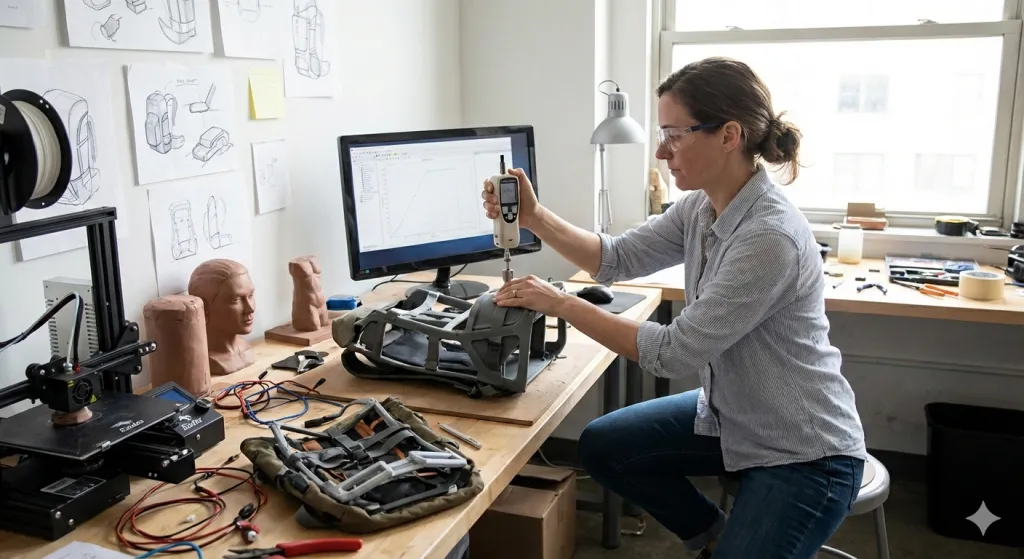
Physical product design and testing is where most hardware startups quietly fail—not because the idea is bad, but because the process is wrong.
Too many founders treat product design as a linear path: design → prototype → manufacture. In reality, successful physical products are built through tight feedback loops, deliberate testing, and controlled exposure to real-world constraints.
This article breaks down how modern founders approach physical product design and testing using lean product development, smart product prototyping, and prototyping and small-batch production—without jumping too early into mass manufacturing.
Why Physical Product Design and Testing Is Different From Digital Products
Unlike software, physical products don’t get unlimited retries.
Every design decision affects:
- Material cost
- Assembly complexity
- Shipping durability
- Compliance and certification
- Customer perception
That’s why physical product design and testing must happen together, not in separate phases. Testing isn’t something that happens after design—it’s what shapes the design itself.
The Lean Product Development Process for Physical Products
A lean product development process focuses on reducing uncertainty, not maximizing polish.
For physical products, this means:
- Building early
- Testing cheaply
- Iterating fast
- Scaling only after validation
Lean development rejects the idea of “perfect before launch.” Instead, it prioritizes learning before scaling.
What Is Rapid Prototyping (and What It’s Not)
A common question founders ask is: what is rapid prototyping?
Rapid prototyping is the practice of creating physical versions of a product quickly and iteratively to test assumptions—not to create a final product.
Rapid Prototyping Is Used To Test:
- Form and ergonomics
- Fit between components
- Core functionality
- Assembly assumptions
Rapid Prototyping Is Not:
- Final manufacturing
- Cosmetic perfection
- Cost optimization
Understanding this distinction prevents founders from overspending early or mistaking a “good-looking” prototype for a validated product.
Product Prototyping: From Concept to Reality
Product prototyping transforms abstract ideas into physical constraints.
Early prototypes answer questions like:
- Does this actually fit together?
- Does it feel intuitive to use?
- Does it survive basic handling?
- Does it behave as expected under load?
As prototypes evolve, testing becomes more demanding—moving from “does it work?” to “does it work every time?”
Prototyping and Small-Batch Production: Where Real Testing Begins
Single prototypes are deceptive. They hide issues that only appear when repetition begins.
This is why prototyping and small-batch production are tightly linked.
Small batches (typically 20–100 units) expose:
- Assembly variability
- Tolerance stacking
- Inconsistent materials
- Unexpected labor costs
- Packaging and shipping failures
This stage turns assumptions into data.
Physical Product Testing Isn’t Just Stress Testing
Many founders think testing means “try to break it.” That’s only one part.
Effective physical product design and testing includes:
- Assembly testing (can someone else build it?)
- Usage testing (do users misuse it?)
- Environmental testing (heat, vibration, shipping)
- Repeatability testing (unit 1 vs unit 50)
These tests shape the design far more than CAD ever will.
Batch Production vs Mass Production: The Critical Difference
Understanding batch production vs mass production is essential for founders.
Batch Production
- 20–100 units
- Flexible design changes
- Learning-focused
- Higher per-unit cost, lower total risk
Mass Production
- Hundreds to thousands of units
- Locked tooling
- Efficiency-focused
- Lower per-unit cost, higher upfront risk
Jumping to mass production without batch validation is one of the most common—and expensive—mistakes in hardware startups.
How Testing Evolves Across Product Stages
Testing requirements change as the product matures.
Early Stage
- Concept validation
- Form and function checks
- Rapid prototyping
Mid Stage
- Small-batch builds
- Assembly and handling testing
- Cost modeling
Pre-Scale
- Durability testing
- Certification prep
- Supply chain validation
Each stage answers different questions—and skipping stages creates blind spots.
Common Mistakes in Physical Product Design and Testing
Founders often struggle because they:
- Treat prototypes as finished products
- Test only one unit
- Ignore assembly complexity
- Optimize aesthetics before function
- Confuse validation with confidence
Good testing is uncomfortable—it reveals problems early, when they’re still cheap to fix.
A Smarter Approach to Physical Product Design
The strongest teams design for testing, not just for manufacturing.
That means:
- Designing parts that are easy to modify
- Avoiding permanent decisions too early
- Choosing materials that support iteration
- Using small batches to surface real issues
This approach shortens timelines and lowers overall cost—even if individual prototypes feel “rough.”
How PrototyperLab Supports Physical Product Design and Testing
PrototyperLab is built around the realities of physical product development—not theoretical workflows.
The process integrates:
- Rapid product prototyping
- Iterative physical testing
- Prototyping and small-batch production
- Lean product development principles
With:
- 30-day prototyping cycles
- Small-batch production starting at 20 units
- Transparent $25/hour engineering pricing
- U.S.-based contracts with Vietnam-based cost efficiency
Founders can design, test, and validate products without committing to mass production too early.
Physical Products Win or Lose Before Mass Production
By the time mass production begins, it’s usually too late to fix fundamental problems.
Physical product design and testing is where:
- Real costs are discovered
- Usability issues surface
- Manufacturing risks are reduced
- Confidence becomes evidence-based
Founders who respect this phase don’t just launch products—they build businesses that can scale.
Ready to Design, Test, and Validate the Right Way?
PrototyperLab helps founders navigate physical product design and testing using lean methods, rapid prototyping, and small-batch production—without unnecessary risk.If the goal is to test reality before scaling, start prototyping with PrototyperLab.
Send over a sketch, a CAD file, or just a description of what the product needs to do. A real quote comes back within 48 hours.
Get a free quote