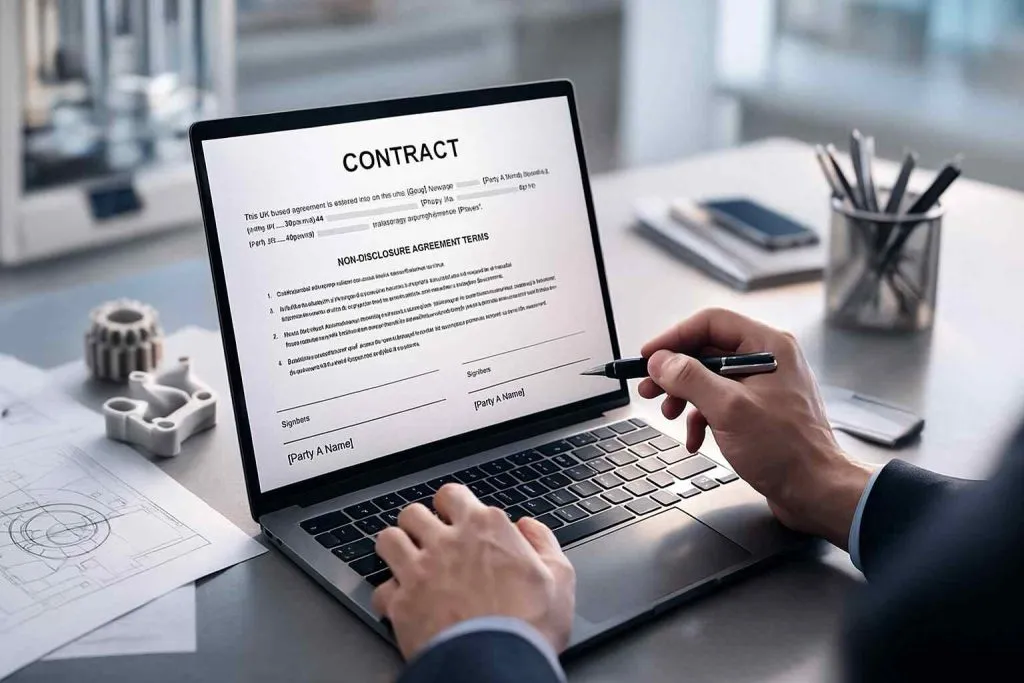
Launching a physical product has never been more accessible—but protecting that idea while keeping development costs low is still one of the biggest challenges early-stage founders face. Traditional US prototyping options can be expensive, while overseas factories offer lower prices but little legal protection if something goes wrong.
That leaves most startup-minded makers stuck between two risky extremes:
- High US costs that drain your entire budget, or
- Low overseas prices with zero IP protection and unclear accountability
A hybrid model—US contracts with Vietnam-based engineering and manufacturing—offers a practical middle ground. It gives founders the legal safety they need without the inflated RandD costs that make early product development feel out of reach.
This article breaks down why this model works so well, how it protects your idea, and how it helps founders build prototypes and small-batch runs affordably without compromising security.
Why Founders Need Both Legal Protection and Cost Control
Your personas (Startup-Minded Makers and Lean Inventors) operate under intense constraints. They need to:
- Build a prototype quickly
- Keep engineering costs predictable
- Protect their idea from being copied
- Validate demand with 20–100 units
- Avoid $10K+ early development costs
For founders in this stage, overspending is dangerous. But so is sending a product idea overseas with no enforceable contract or legal framework.
This is why most hardware founders struggle:
Cost and protection usually exist on opposite ends of the spectrum.
A US + Vietnam hybrid system finally brings both together.
The Biggest Risks of Only Manufacturing Overseas
Founders considering full overseas development often face hidden risks that aren’t obvious until something goes wrong.
1. No enforceable contract protections
When contracts are signed directly with overseas factories:
- US courts cannot enforce them
- IP protection is extremely limited
- Most agreements aren’t legally binding
- Disputes are expensive or impossible to resolve
This is the #1 reason founders lose control of their products.
2. Weak IP and patent safeguards
Many factories work with dozens of clients. Without strict legal agreements, nothing prevents:
- Your design being reused
- Your product being shown to other clients
- Internal teams reverse-engineering your idea
Even NDAs abroad often have no real enforcement mechanism.
3. Hidden manufacturing and prototyping fees
Factories often offer attractive quotes, only to add:
- Tooling charges
- Redesign costs
- Minimum order quantity (MOQ) fees
- Packaging surcharges
- Logistics markups
Founders end up overspending anyway—just in a different way.
4. Communication barriers that slow progress
Time zones, language gaps, and unclear instructions often lead to:
- Longer timelines
- Misinterpreted requirements
- Unnecessary redesign cycles
- Higher total cost
Speed matters. Slow development kills momentum.
5. High MOQs that founders don’t need
Most factories refuse to produce fewer than:
- 500–1,000 units per order
Early-stage founders only need 20–100 units to validate demand. Overseas factories rarely support that.
These risks make fully overseas development unsuitable for startup-minded makers. Yet US manufacturing alone is simply too expensive at the beginning.
A hybrid model solves the problem.
How US Contracts + Vietnam Manufacturing Protect Your Idea
This structure works because it strategically separates legal control from execution costs.
You get:
1. US Legal Protection
Contracts, NDAs, and agreements are governed by US law, not foreign jurisdictions.
This gives founders:
- Enforceable IP protection
- Clear contract terms
- Reliable dispute mechanisms
- A legal framework that factories must follow
For first-time product creators, this alone removes 80% of the fear around sharing an idea.
2. Cost-Effective Vietnam Manufacturing
Vietnam offers:
- Lower engineering labor cost
- Affordable prototyping
- Small-batch production availability
- High-quality craftsmanship
- Strong communication from US-managed teams
Founders avoid the dramatic RandD markups of US prototyping shops while maintaining quality.
3. Direct Accountability
Because the business entity is US-based, it is responsible for:
- Engineering integrity
- Communication
- Timelines
- Quality control
- Protecting your idea
No founder gets stuck in an overseas “gray zone” where responsibility is unclear.
4. Safe Collaboration With Engineers
You still collaborate with real engineers—but under the protection of a US entity that oversees:
- Design
- Prototyping
- Iteration
- Manufacturing
- Logistics
This avoids the risks of freelance engineers or offshore factories duplicating your work.
5. Predictable, Transparent Pricing
The hybrid model pairs cost protection with:
- Transparent prototyping pricing
- Clear breakdown of hours
- No hidden factory fees
- No vague or inflated estimates
This supports faster and safer product validation.
Why Vietnam Is Emerging as the Best Manufacturing Partner for Startups
Vietnam is now one of the fastest-growing manufacturing hubs in Asia—and for good reason:
- Lower labor and facility costs than in China
- Strong engineering talent
- Better compliance with US expectations
- Smaller MOQ flexibility
- More consistent communication
- High-quality mold making and small-batch production
- Rapid prototyping capability for plastics, resin, and silicone molds
For founders working on the following, Vietnam offers the best mix of affordability and quality:
- Consumer electronics
- Smart home devices
- Small lifestyle products
- Novelty toys
- Home and kitchen gadgets
- IoT prototypes
How This Hybrid Model Helps Protect Your Intellectual Property
Founders often assume patents alone protect their idea. They don’t.
Your real IP protection comes from:
1. US jurisdiction over your contracts
If someone breaches:
- NDA
- Work-for-hire agreement
- IP assignment
- Confidentiality terms
You can take direct action.
2. Controlled engineering environment
Fast, low-cost offshore factories often expose your product to dozens of employees. A hybrid model keeps your project tight and controlled.
3. Patent research and design-around support
PrototyperLab’s US-based team helps founders:
- Check for active patents
- Avoid infringement
- Design around risky areas
- Strengthen your unique differentiators
This protects your idea before a prototype even exists.
4. Clear chain of custody
Every file, revision, and design stays documented, timestamped, and owned by you.
Where Founders Overspend Without Realizing It
Here are the biggest ways founders waste money by choosing the wrong manufacturing path:
- Paying high US engineering rates ($75–$150/hr)
- Purchasing tooling before validating basic demand
- Committing to massive MOQs
- Paying for unnecessary rework from miscommunication
- Getting trapped in hidden factory costs
- Receiving poor-quality prototypes that need to be rebuilt
- Losing their idea to copycats, forcing an expensive redesign
When founders choose incorrectly, they burn through their runway long before the first sale.
A US–Vietnam hybrid model prevents that.
Why Founders Prefer 20–100 Unit Small Batch Production
This model is built for validation, not mass manufacturing.
Founders use 20–100 units to:
- Test on Amazon
- Run a Kickstarter pre-launch
- Conduct customer interviews
- Generate early revenue
- Gather product feedback
- Secure investor interest
- Build a beta tester group
Producing 500–1,000 units too early leads to:
- Cash flow stress
- Inventory risk
- Storage issues
- Poor iterations
- Bad reviews for flawed early designs
Small-batch runs are the smart path—and Vietnam manufacturing supports them without massive MOQs.
Why US + Vietnam Hybrid Works Better Than Any Single-System Approach
This structure gives founders peace of mind and a system that works.
From the US:
- Legal protection
- Contract safety
- Clear communication
- IP accountability
From Vietnam:
- Affordable engineering
- Small-batch production
- Skilled manufacturing
- Cost-effective materials
- Lower facility costs
It’s the best of both worlds—and it’s exactly what early founders need.
PrototyperLab’s Hybrid Model: Built for Startup-Minded Makers
PrototyperLab was designed specifically for founders who need:
- 30-day prototyping
- $25/hour transparent engineering
- 20–100 unit small batch production
- US-based contracts and IP protection
- Vietnam-based affordability
- Concept-to-logistics support
This system eliminates the two biggest fears founders have:
- Losing their idea
- Overspending before product-market fit
And it replaces both with clarity, confidence, and speed.
Get Protected + Stay Affordable With a US–Vietnam Hybrid Build
If you’re ready to prototype your idea, protect it legally, and avoid overspending on manufacturing, the next step is simple. Produce 20–100 units with no MOQ pressure. Request a quote and get small batch pricing.
Send over a sketch, a CAD file, or just a description of what the product needs to do. A real quote comes back within 48 hours.
Get a free quote