For most startup founders, the hardest step isn’t sketching the idea—it’s turning that idea into something real without burning through time or capital. That’s where vacuum casting for startups becomes the quiet workhorse of modern product development.
It fills the critical gap between a single prototype and scalable manufacturing, helping innovators validate demand, refine designs, and launch fast without committing to costly injection molds or 500-unit minimums.
This guide breaks down how vacuum casting works, when it’s the right choice, and why it’s become the preferred method for lean, fast-moving founders.
What Is Vacuum Casting—and Why Startups Rely on It
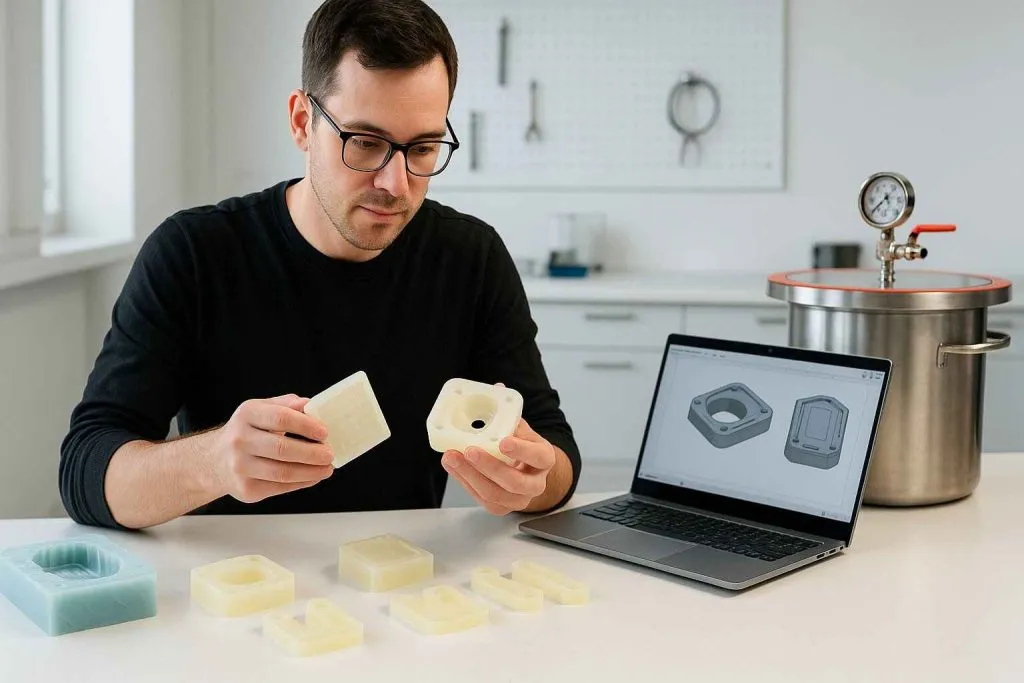
Vacuum casting, also known as urethane vacuum casting, is a versatile production process that utilizes a silicone mold to replicate parts from a master model. Founders typically use it after a first 3D print or CNC-machined prototype—when they need 20 to 100 identical, high-quality units for functional testing, investor demos, or early market release.
The process combines precision and affordability:
- A master pattern is made (usually 3D printed).
- A silicone mold is poured and cured around it.
- Urethane or resin is poured into the mold under vacuum to remove air bubbles.
- After curing, each cast part mirrors the master with a near-production finish.
Unlike injection molding, vacuum casting doesn’t require steel tooling or high setup costs—making it perfect for low-volume manufacturing and small batch production where every dollar and day count.
Why Vacuum Casting Solves Key Startup Pain Points
Early-stage founders face three major challenges: cost, time, and scalability. Vacuum casting directly addresses all three.
1. Lower Costs Without Sacrificing Quality
Traditional injection molds can cost $5,000–$20,000 before the first part is made. For a founder still testing demand, that’s a nonstarter.
Vacuum casting molds, on the other hand, cost a fraction—often a few hundred dollars—and can produce 20–50 perfect parts before needing replacement. That makes it ideal for affordable prototype production and pre-launch sales.
2. Fast Turnaround = Faster Market Testing
Speed matters when investors are waiting or competitors are circling. With PrototyperLab’s 30-day prototyping and fast vacuum casting prototype production, a founder can move from CAD model to physical parts in under two weeks. That allows startups to gather real-world feedback, refine designs, and validate product-market fit—all before committing to full-scale manufacturing.
3. Freedom to Iterate
Each silicone mold can be adjusted or replaced as you improve your design. That flexibility allows multiple iterations without resetting your entire production process—something impossible with rigid steel molds.
Vacuum Casting vs. Other Prototype Methods
Choosing the right process isn’t about hype—it’s about context. Here’s how vacuum casting compares with other common options.
| Method | Ideal Use | Pros | Limitations |
| 3D Printing | Early concept models or one-off parts | Fast, low setup cost | Limited durability, poor surface finish |
| CNC Machining | High-strength functional prototypes | Precision, material options | Higher cost for complex shapes |
| Vacuum Casting | 20–100 identical pre-production units | Great surface finish, fast turnaround, low cost per part | Limited mold lifespan |
| Injection Molding | Mass production (500+ units) | Scalable, consistent | High upfront cost, long setup time |
Takeaway: When your goal is to produce 20–100 testable, production-quality parts without incurring factory-scale costs, vacuum casting sits perfectly in the middle—bridging the gap between prototypes and manufacturing.
Best Use Cases for Vacuum Casting in Startups
Not every startup requires vacuum casting, but for certain products and stages, it’s the most effective move.
1. Market Validation and Pre-Sales
Founders using Kickstarter or Shopify often need sellable-quality prototypes to gauge real demand. Vacuum casting produces parts good enough for photography, influencer testing, or even initial customer shipments.
2. Functional Testing Before Scaling
If your product has moving parts or is subject to mechanical stress (e.g., IoT devices, home gadgets, wearables), vacuum casting offers reliable functional testing. Urethane materials can mimic the strength of ABS or nylon, providing accurate data for performance and durability.
3. Bridge Production Between Prototype and Injection Molding
Vacuum casting is the bridge between prototyping and manufacturing. Once your product’s demand is proven, you can transition to injection molding with minimal redesign because casting helps refine part geometry and tolerances beforehand.
4. Small Batch Runs for Niche Markets
For niche or seasonal products—like specialized pet accessories, smart home add-ons, or small IoT components—mass production isn’t necessary. Low-volume manufacturing through vacuum casting allows startups to stay lean while testing limited runs profitably.
Realistic Costs of Vacuum Casting for Startups
Let’s make it tangible. Here’s what a typical vacuum casting project looks like under PrototyperLab’s transparent $25/hour model:
| Stage | Cost Example | Description |
| Master Model (3D Print or CNC) | $100–$200 | Used to create the silicone mold |
| Silicone Mold Creation | $150–$300 | Can produce 20–50 parts |
| Casting and Finishing (per part) | $20–$40 each | Includes resin, curing, and surface treatment |
| Total for 20 Parts | $700–$1,100 | Production-ready small batch |
These are not hypothetical numbers—they reflect real-world startup-friendly rates made possible through PrototyperLab’s U.S.-Vietnam hybrid production model.
In contrast, a comparable injection-molded batch could cost five times more with weeks of lead time.
Why Vacuum Casting Excels at Speed and Quality
Founders often assume that “fast” means “cheap” or “compromised.” Vacuum casting proves otherwise. Using high-grade silicone and urethane resins, this process delivers:
- Excellent surface finish: near injection-mold quality
- Material versatility: rigid, flexible, or transparent options
- Consistent replication: up to 50 identical units per mold
- Short cycle times: 1–2 days from mold to finished part
That’s how startup teams can prototype, test, and ship within 30–45 days—without sacrificing visual or functional performance.
When Vacuum Casting Isn’t the Right Fit
Authority means honesty. While vacuum casting is powerful, it’s not universal.
You should reconsider if:
- You need hundreds or thousands of parts regularly (injection molding is more cost-effective)
- Your design has ultra-thin walls or complex metal inserts
- You require long-term, high-temperature materials beyond urethane’s limits
In such cases, PrototyperLab helps clients transition seamlessly into CNC machining or injection molding once demand is validated.
The point isn’t to sell a single process—it’s to get your product market-ready efficiently.
How Startups Use Vacuum Casting to Launch in Under Two Months
PrototyperLab’s workflow is designed around startup urgency. Here’s a typical example of how founders get from CAD to launch-ready batch:
- Day 1–3: Upload CAD files → get consultation + transparent quote
- Day 4–10: Master model + silicone mold creation
- Day 11–15: First batch of 20–50 cast parts completed
- Day 16–20: Testing, refinements, and final production
- Day 30–45: Product shipped to U.S. or EU 3PL for Amazon/Shopify launch
That’s idea to market-ready in six weeks—a pace that aligns with real startup timelines, not corporate ones.
Why Founders Choose PrototyperLab for Vacuum Casting
Startups don’t just need parts—they need a partner who understands their pressure to move fast, minimize risk, and maintain control.
PrototyperLab delivers that through a model built specifically for startup realities:
- 30-day prototyping to validate fast
- 20-unit minimum production for market testing
- $25/hour transparent engineering pricing
- U.S.-based contracts and legal protection for peace of mind
- Vietnam-based manufacturing for cost efficiency without quality trade-offs
This hybrid approach means you can iterate like a startup but launch like an established brand.
Build Smarter, Not Harder
Vacuum casting isn’t just a manufacturing method—it’s a strategic advantage for startups that value agility, affordability, and control. It’s how lean innovators move from “idea” to “in hand” faster than traditional manufacturers can quote.
For founders serious about speed and validation, vacuum casting for startups is the bridge that turns prototypes into products—and ambition into traction.
Validate your product with small batch manufacturing built for startups. Request a quote from PrototyperLab—fast, transparent, and tailored for your launch.
Send over a sketch, a CAD file, or just a description of what the product needs to do. A real quote comes back within 48 hours.
Get a free quote