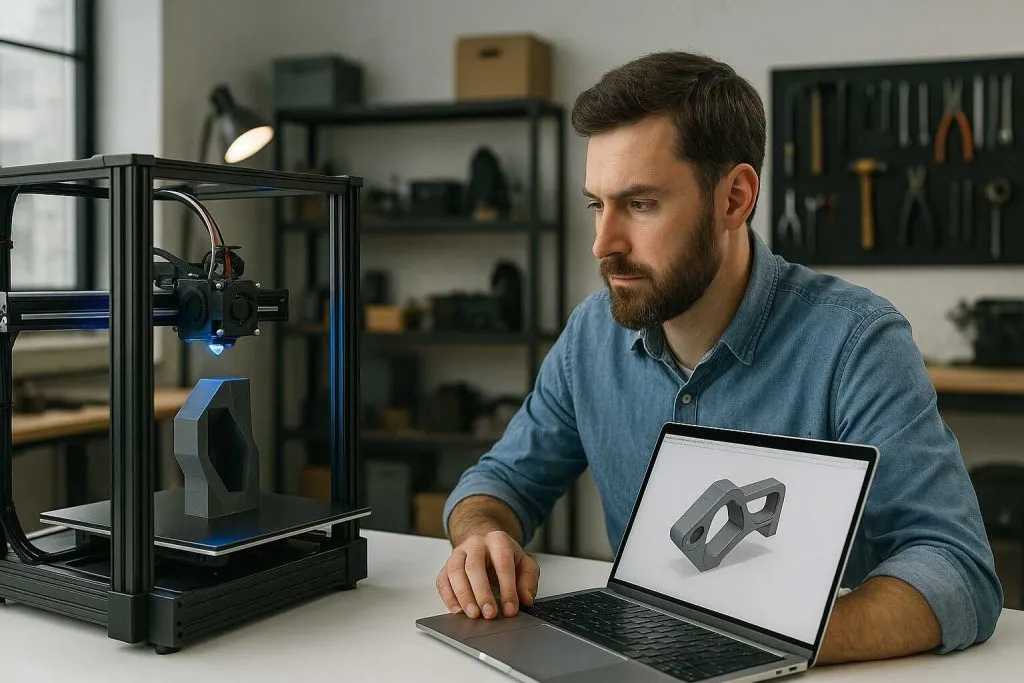
The days of buying a product from Alibaba, slapping a trademark logo on it, and riding Amazon profits are over.
That playbook worked years ago. It does not work now.
Once a factory manufactures a product at scale in China, that same product is immediately visible to brokers and agents on Alibaba. Those exact designs get resold to hundreds of Amazon sellers. Even if a seller negotiates a “custom” run of 500 units, there is nothing stopping another seller from launching the same product within weeks—often at a lower price.
The result is predictable:
- Prices race to the bottom
- Margins evaporate
- Advertising costs climb
- No one wins long-term
To consistently compete on Amazon today, sellers must develop a unique product, not resell a shared one.
This article explains exactly how serious Amazon sellers are doing that—without betting their entire budget upfront—and how a prototype-first, small-batch strategy changes the game.
Why Private Label No Longer Works on Amazon
Amazon is no longer a marketplace for generic products with new logos. It is a marketplace where speed, differentiation, and defensibility matter.
Private label fails today because:
- Factories reuse the same designs
- Sellers can copy listings, images, and features instantly
- Price competition becomes the only lever
- Reviews and ad spend decide winners—not product quality
Even strong branding cannot protect a product that is easy to copy.
The only sustainable advantage left is owning the product itself—its design, features, functionality, and manufacturing process.
That requires real product development.
What “Develop a Product for Amazon” Actually Means
Developing a product for Amazon does not mean inventing something revolutionary. It means creating a product that is:
- Harder to copy
- Clearly better for a specific use case
- Designed intentionally around customer feedback
- Validated before mass production
This is where many sellers get stuck. They assume product development means:
- Massive tooling costs
- 10,000-unit minimums
- Six-figure R&D budgets
That assumption is wrong.
Modern Amazon product development is centered on prototyping, testing, and small-batch production.
Real-World Examples: Custom Products That Started Small
PrototyperLab has helped Amazon sellers develop and launch custom products that started with prototypes and small batches—not container loads.
Two examples include:
- A custom automatic gong product (Autogong)
- A redesigned bicycle costume
- Modular robots built for kids
Both products were developed to solve specific usability and quality problems found in existing listings. They were not generic items pulled from a catalog. They were designed, tested, refined, and produced in controlled batches before scaling.
This is how modern Amazon brands are built.
Step-by-Step: How to Create Your Own Unique Product for Amazon
Step 1: Research a Real Problem or Improvement Opportunity
Every strong Amazon product starts with research—not guesses.
There are two viable paths:
- Identify an unmet problem
- Improve an existing product that already sells
The second option is often less risky because demand is already validated. If customers are buying a product but leaving complaints, those complaints are opportunities.
Look for:
- Poor durability
- Awkward usability
- Missing features
- Safety concerns
- Inconsistent quality
This research phase defines what the product needs to be—not what the factory already offers.
Step 2: Identify the Features That Matter Most
Not all features are equal. Amazon reviews make this clear.
Successful product development focuses on:
- The top 2–3 features customers care about most
- Removing unnecessary complexity
- Improving reliability and consistency
This step prevents overengineering and wasted cost. A product that does one thing well beats a product that does five things poorly.
Step 3: Design the Product Around Those Features
Once priorities are clear, design begins.
This includes:
- Mechanical design
- Material selection
- Size and ergonomics
- Safety considerations
- Manufacturability
Design decisions should always connect back to:
- Customer pain points
- Amazon usage scenarios
- Packaging and shipping realities
This is where a product becomes owned instead of copied.
Step 4: Build Prototypes, Test, and Improve
Prototyping is where ideas become reality.
A prototype allows sellers to:
- Validate functionality
- Identify design flaws early
- Test materials and assembly
- Get hands-on feedback
Most products do not get everything right on the first version. Prototyping allows iteration without committing to mass production.
This step dramatically reduces long-term risk.
Step 5: Start with Small Batch Production
Going straight to full-scale manufacturing is one of the most expensive mistakes Amazon sellers make.
Small batch production—typically 20 to 100 units—offers three critical advantages:
- Faster MVP launch
Get a market-ready product live quickly and start collecting real customer feedback. - Manufacturing refinement
Improve assembly, quality control, and consistency before scaling. - Capital risk reduction
Avoid thousands of units sitting in FBA warehouses accumulating storage fees if demand is lower than expected.
Small batch production is not a compromise. It is a strategic advantage.
Common Questions Amazon Sellers Ask Before Developing a Product
What product certifications are required to sell on Amazon?
Certification depends on the product category and materials. Common requirements include FCC, CPC, GCC, MSDS, and other compliance documentation. These requirements should be identified early—before production.
Where is product testing done for certification?
Product testing is typically conducted at accredited labs that specialize in compliance testing for U.S. and EU markets. The right lab depends on the product type and certification needed.
How do sellers avoid patent or IP issues?
Patent and trademark research should be done before committing to a final design. A proper search helps identify existing patents and avoid infringement.
PrototyperLab supports patent and trademark searches as part of the product development process to reduce legal risk.
How does logistics work for Amazon FBA?
Logistics includes:
- Packaging design
- Labeling compliance
- Shipping method selection
- Delivery to FBA warehouses
With experience shipping directly to Amazon fulfillment centers, logistics becomes a managed process—not a guessing game.
How important is packaging optimization for ecommerce?
Packaging impacts:
- Shipping costs
- Damage rates
- Unboxing experience
- Customer reviews
Ecommerce packaging must protect the product, meet Amazon requirements, and present the brand clearly—without unnecessary cost.
How does the PrototyperLab process work?
The process is structured and transparent:
- Consultation – Understand the product, goals, and constraints
- Quotation – Clear R&D costs and estimated per-unit small batch pricing
- Research & prototyping – Design, build, test, and refine
- Final prototype approval – Lock the design
- Small batch production – Produce an MVP-ready batch
Each step is designed to reduce uncertainty and cost.
Does PrototyperLab handle logistics?
Yes. With years of experience shipping products to Amazon FBA warehouses, logistics is handled as part of the overall solution.
Why Prototype-First Amazon Sellers Win
Amazon rewards sellers who:
- Launch better products
- Iterate faster
- Control their supply chain
- Minimize unnecessary risk
Developing a product for Amazon is no longer about finding a factory. It is about building a product strategy.
Prototyping and small batch production make that strategy affordable and repeatable.
Develop a Product for Amazon Today
Competing on Amazon today requires more than sourcing. It requires ownership.
PrototyperLab helps Amazon sellers:
- Prototype products fast
- Validate demand with small batch production
- Reduce capital risk
- Build products that are harder to copy
Develop a product for Amazon the smart way.
Book a consultation to develop a product for Amazon. Get a quote for rapid prototyping and small batch production. Start building a unique Amazon product—before competitors copy it.
The faster a product is prototyped, tested, and validated, the stronger its position will be when it scales.
Send over a sketch, a CAD file, or just a description of what the product needs to do. A real quote comes back within 48 hours.
Get a free quote